1. Introduction — Why “candle psychology” matters in Forex
When you open a chart of, say, EUR/USD or GBP/USD, each candlestick isn’t just a data point—it’s a story of human decisions: buyers, sellers, hesitation, momentum.
Candlesticks form because people trade. They react to price, and their actions leave visual footprints. That’s where
candlestick psychology comes in: understanding why a candlestick looks the way it does, not just what it looks like.
In Forex trading, if you understand the psychology behind the candles you’re seeing, you’ve got a stronger edge: you’re seeing not just shapes, but sentiment. And sentiment often
leads to price.
In this article, we’ll explore:
- What candlestick psychology refers to
- How to interpret the story behind the candles
- How to apply it in Forex trading (especially on pairs you trade)
- Common traps and how to avoid them
2. What is candlestick psychology?
2.1 The market is emotional, and the candle is its snapshot
The market is the sum of all participants: speculators, institutions, and retail traders. They’re driven by the same basic emotions:
fear,
greed,
hope, and
uncertainty.
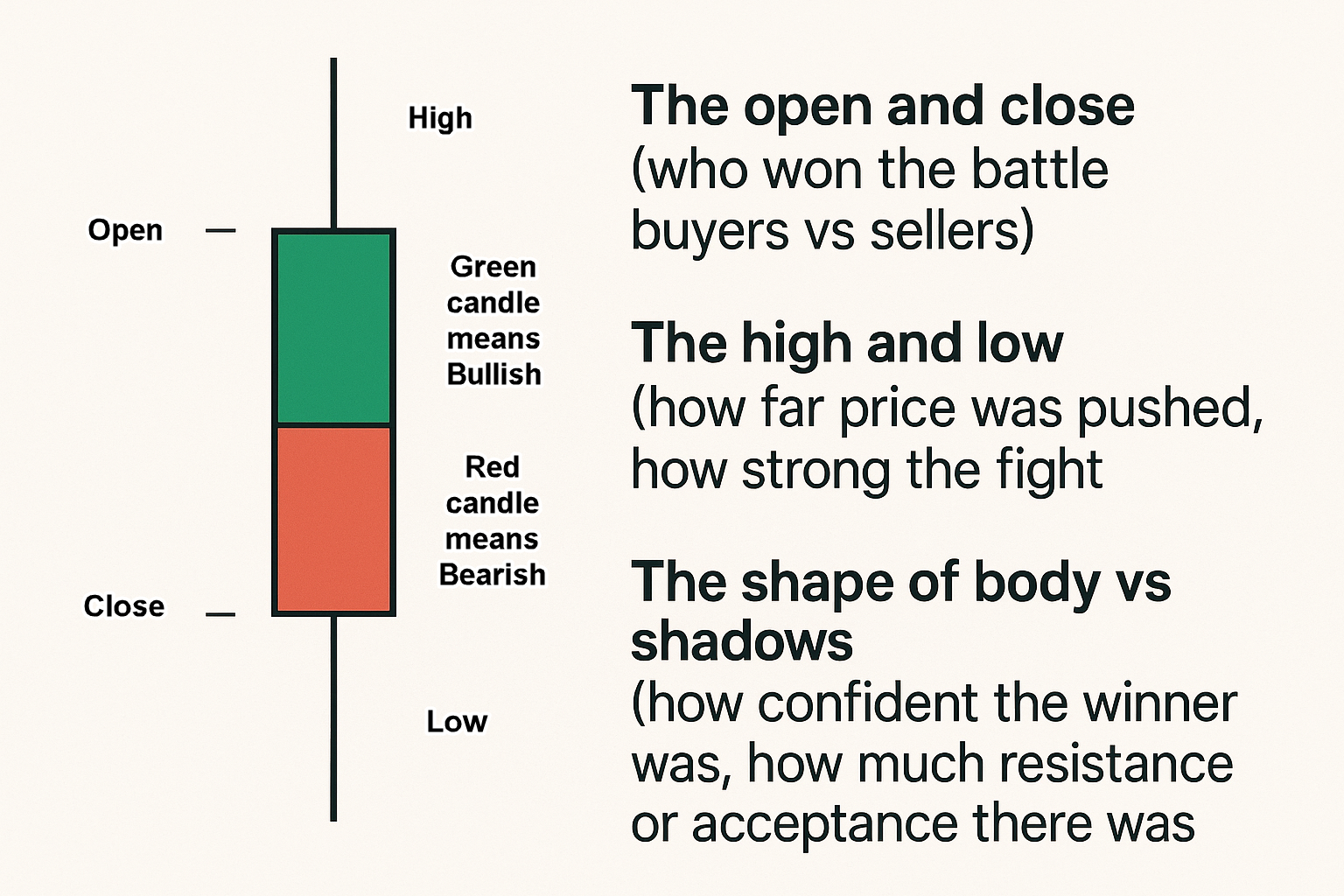
A single candlestick for a given time frame (H1, H4, Daily) shows:
- The open and close (who won the battle between buyers and sellers)
- The high and low (how far the price was pushed, how strong the fight)
- The shape of the body vs shadows (how confident the winner was, how much resistance or acceptance there was)
Thus, each candle is a mini-battlefield of emotion and decision.
2.2 Why psychology is important in Forex, especially
- Forex is continuous (markets open 24/5), so the flow of new information + human reaction is fast.
- Retail traders often bring emotion into their trades (fear of missing out, revenge trading), so the collective emotion can leave strong candlestick signals.
- Understanding the psychological story gives you context: you’re not just reacting to a pattern; you’re reading a behaviour.
2.3 Candlestick formations = emotional “readouts.”
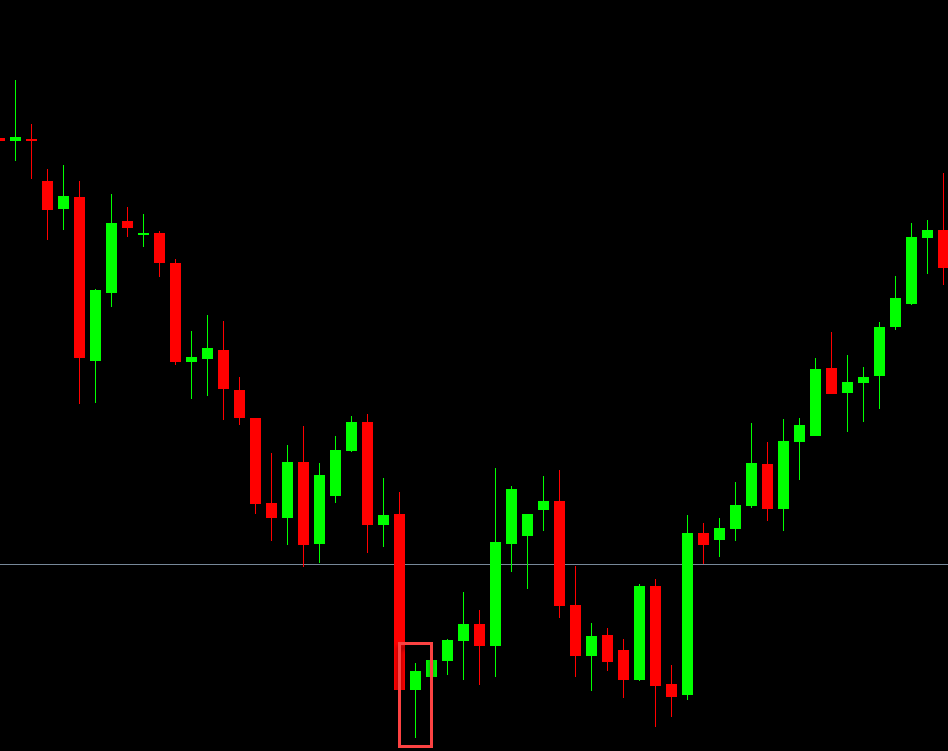
For example, a long lower wick (hammer‐type) after a down trend hints that sellers pushed price down but buyers pushed back—so the candle reflects selling exhaustion and buyer reaction. That’s psychology.
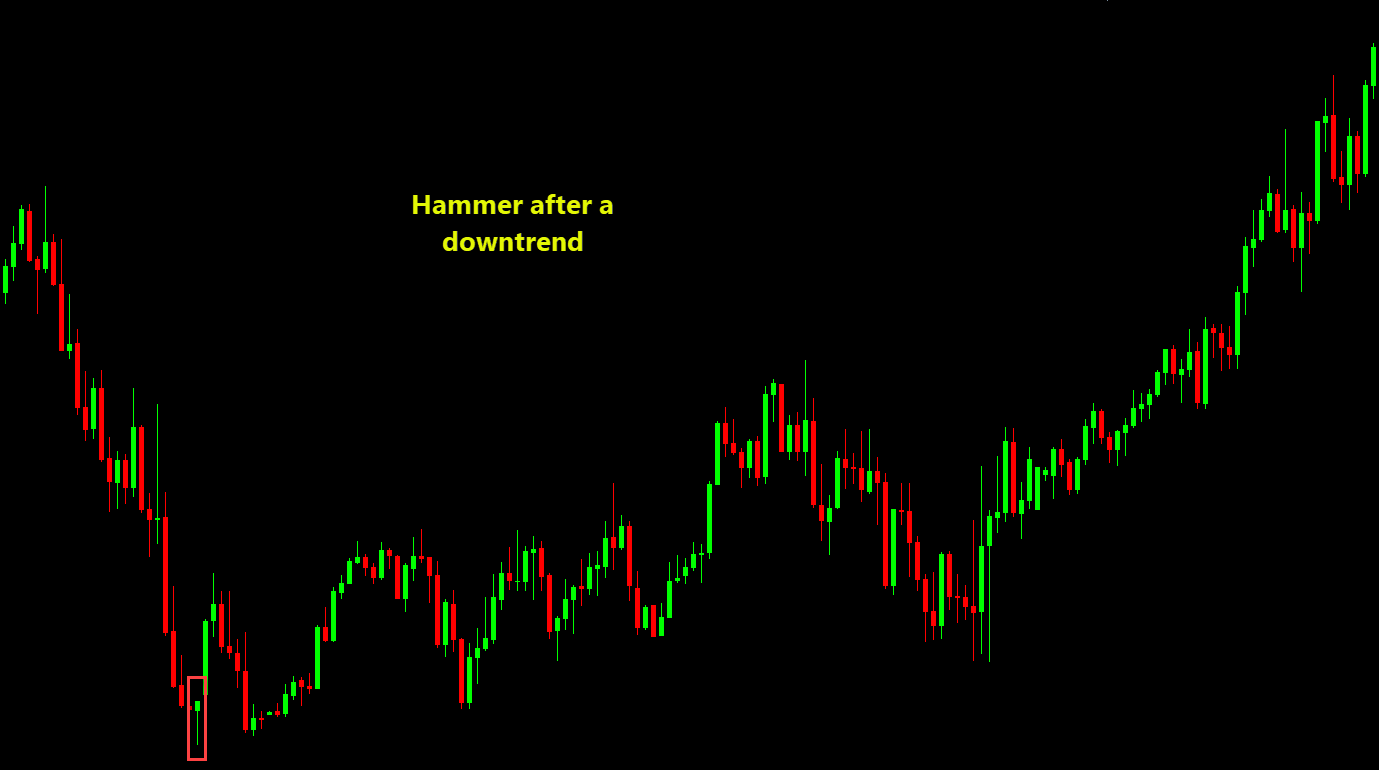
Therefore, reading candles is not just about memorising shapes; it’s about asking: What were market participants doing during this period?
3. Key psychological cues in candlesticks
Here are specific cues and what they typically mean. Note: context matters (trend, market structure) — a cue alone isn’t sufficient, but it guides your decision-making.
3.1 Body size and what it shows
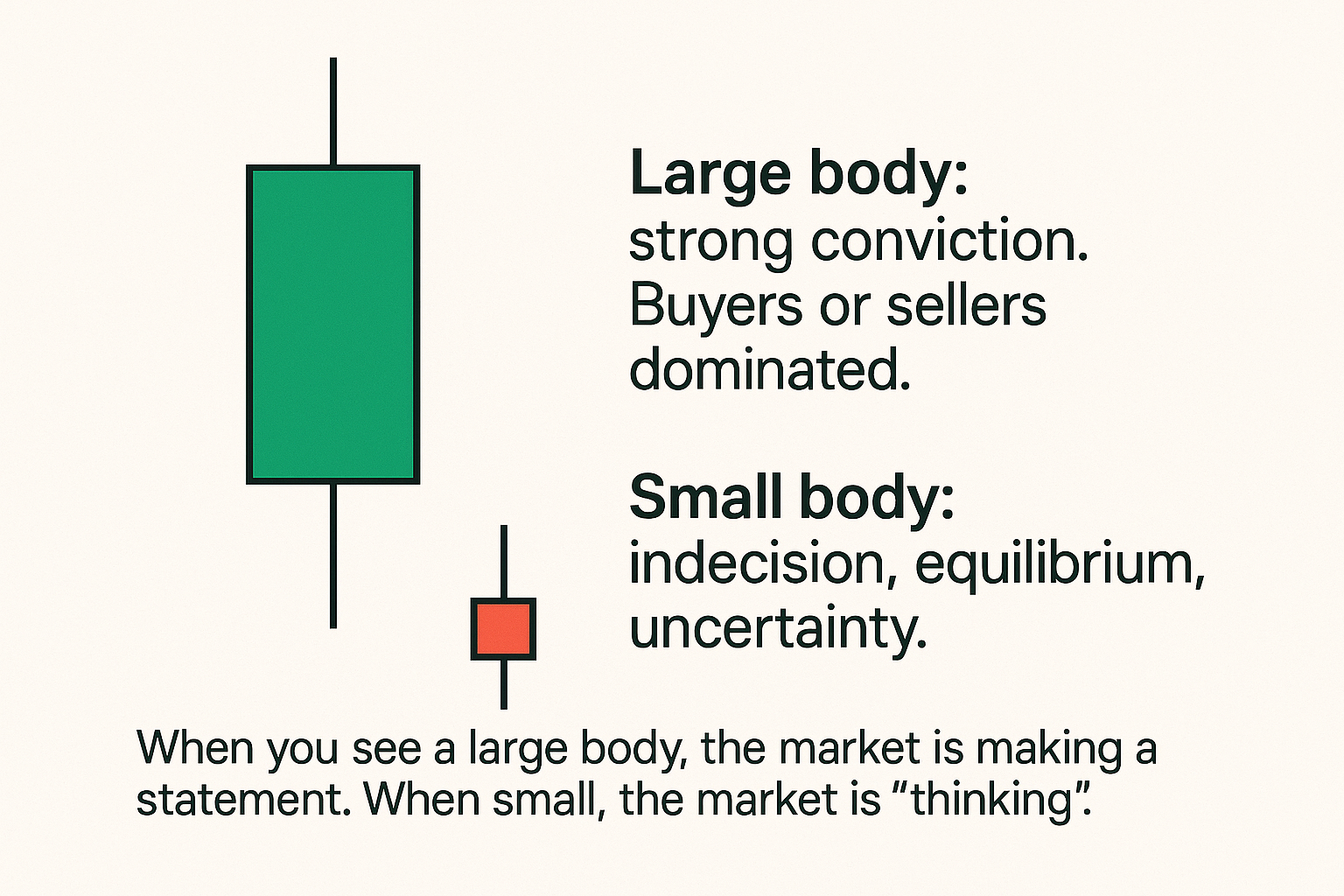
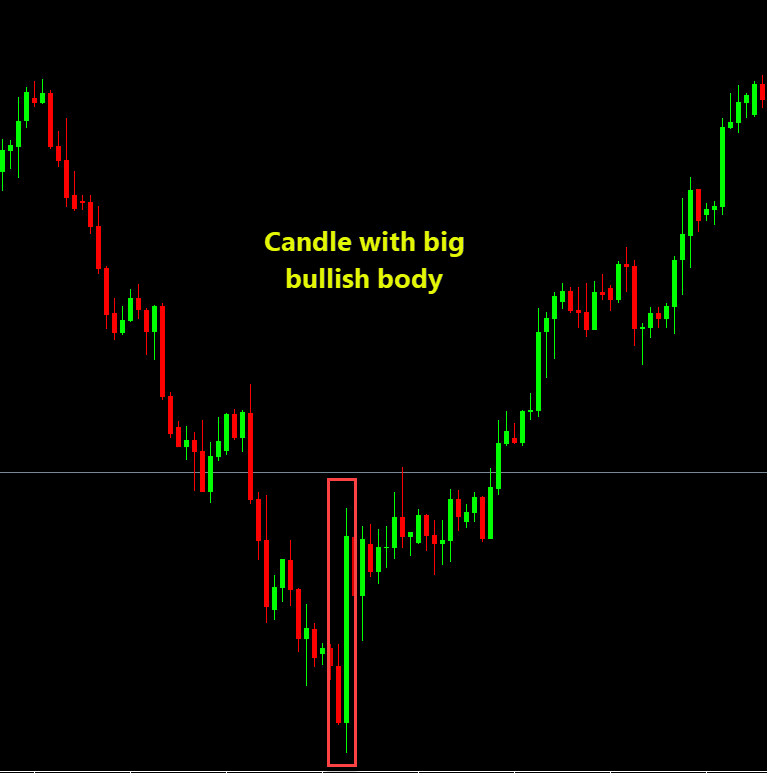
- Large body: strong conviction. Buyers or sellers dominated.
- Small body: indecision, equilibrium, uncertainty.
When you see a large body, the market is making a statement. When small, the market is “thinking”.
3.2 Shadows (wicks) and their meaning
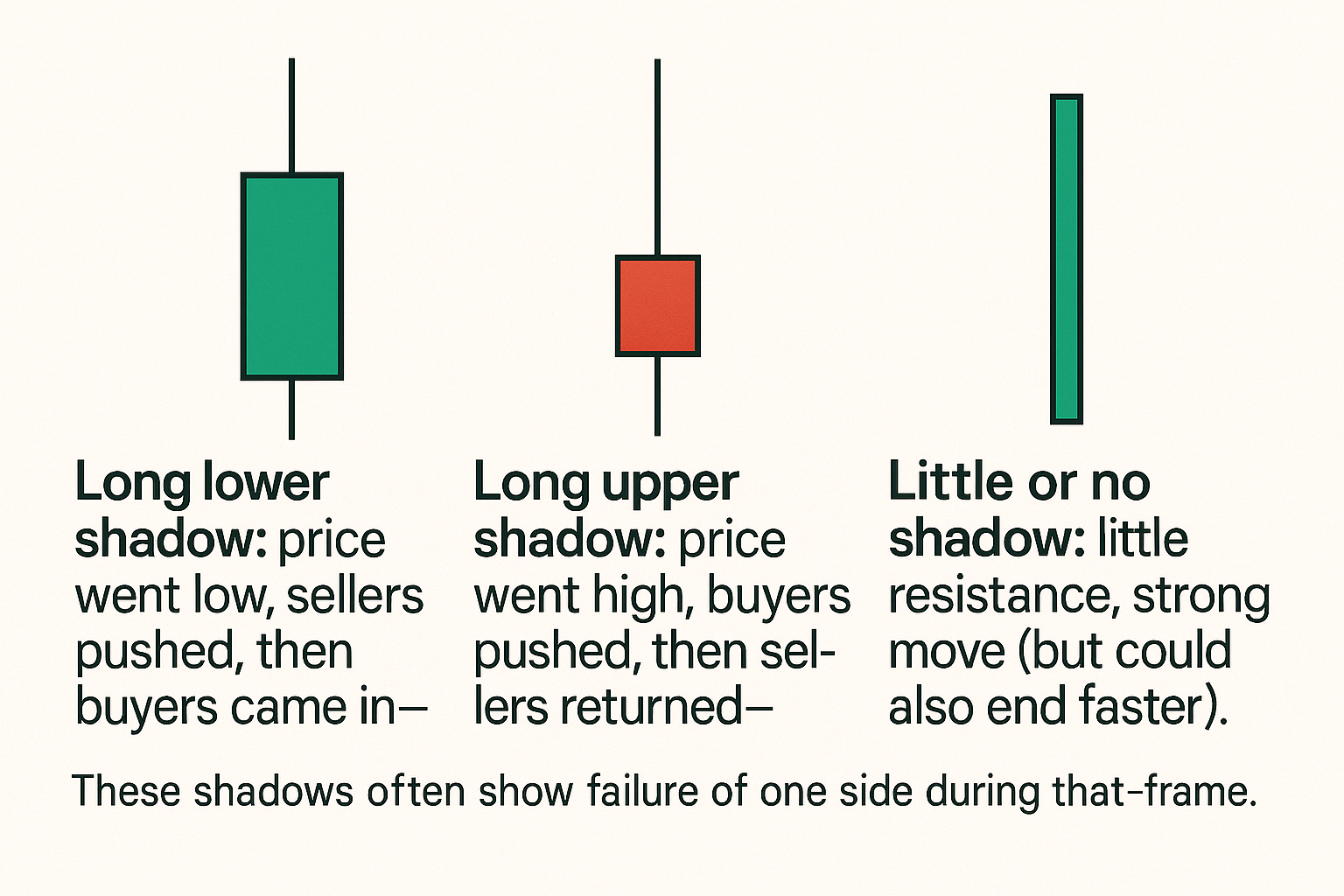
- Long lower shadow: price went low, sellers pushed, then buyers came in—possible rejection of lower prices.
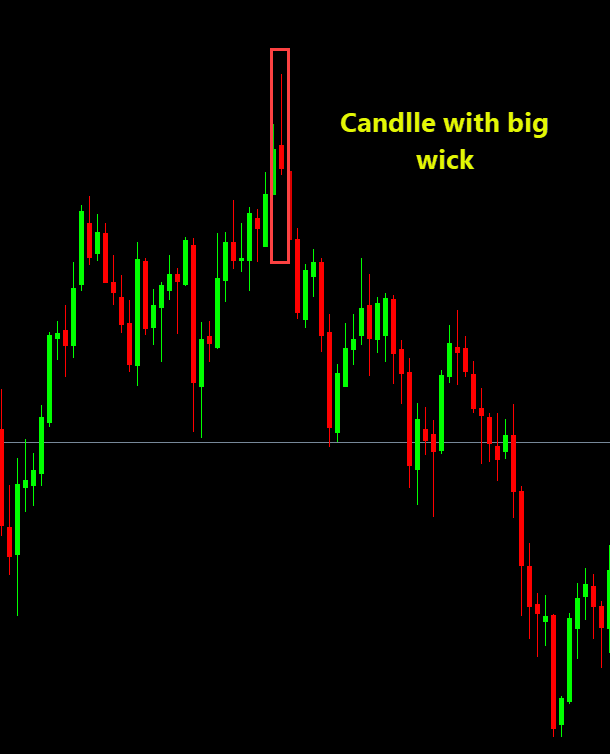
- Long upper shadow: price went high, buyers pushed, then sellers returned—possible rejection of higher prices.
- Little or no shadow: little resistance, strong move (but could also end faster).
These shadows often show failure of one side during that time-frame.
3.3 Placement in trend/context
- A strong reversal psychological cue (like a hammer) is much more meaningful after a trend.
- A candle that looks good but is in a choppy sideways market may be weak.
As one guide says: “Candlestick patterns reveal buyer-seller psychology, but only work when the trend or structure gives context.”
3.4 Sequential candles and evolving psychology
Often, the psychology unfolds:
- Trend in place → exhaustion (weak candles) → reversal attempt (strong candle) → follow-through or failure.
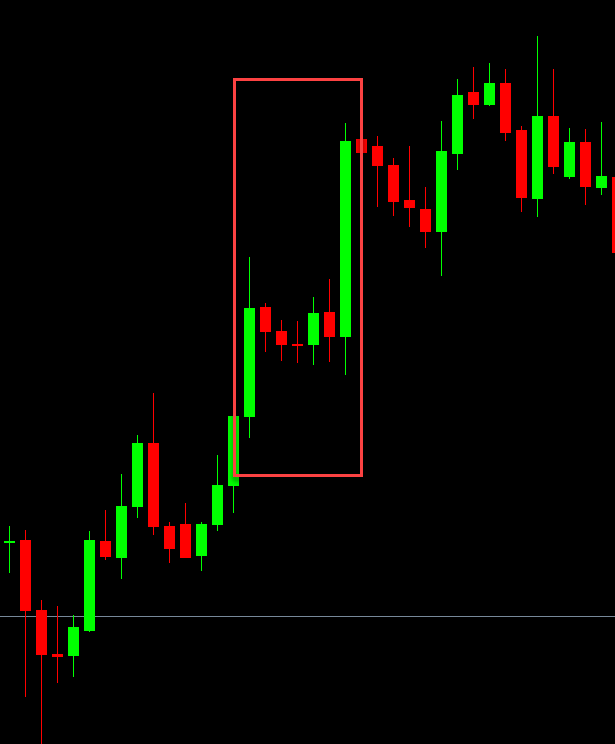
- In a trend scenario: pull-back → consolidation (small bodies) → continuation candle (large body) for riding the trend.
Reading that flow helps you decide: is this a reversal or continuation?
4. Applying candle psychology in your Forex trading
4.1 Step-by-step workflow
-
- Scan the chart for meaningful candles
- Look at your timeframe (H4 or Daily often stronger)
- Identify candles with a clear emotional story: big body or big wick, or runs of small bodies.
-
- Check context
- What was the prior trend?
- Is the candle at a key level (support/resistance, trendline)?
- Is the market in a clean structure (not too noisy)?
-
- Ask the psychological question
- Who controlled the session? Buyers or sellers?
- Did one side fail to push further? (e.g., long wick indicates failure)
- Did the following candle confirm the story?
-
- Make a decision
- If cue aligns with your plan (either reversing or continuing the trend) then prepare trade.
- Define entry, stop-loss and target based on structure.
- Manage risk & assess follow-through
- Even if the candle tells a strong story, markets may balk. Confirm with the next candle or price action.
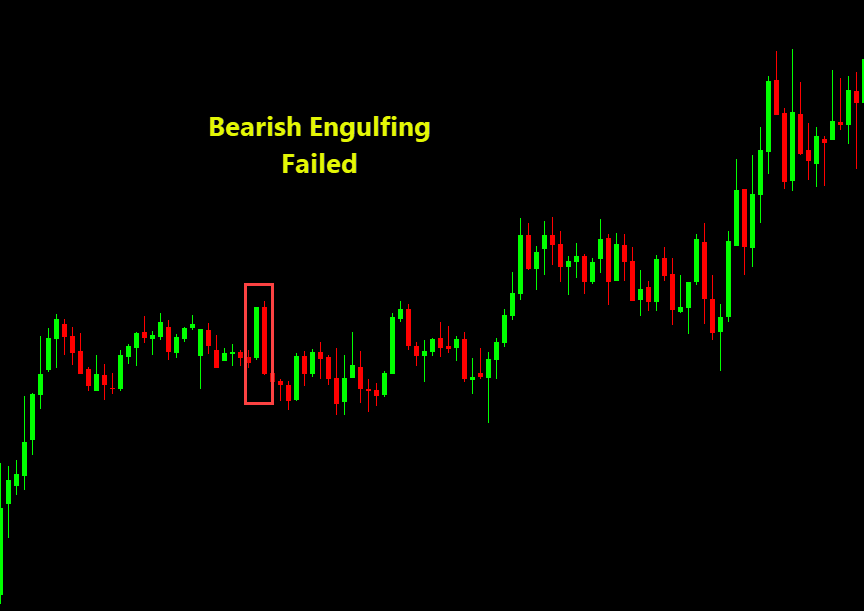
- Use stop-losses. Candles tell a story but don’t guarantee outcome.
4.2 Example scenarios (Forex pairs)
- Suppose EUR/USD has been dropping. Then on H4 you see a candle with a long lower shadow, small body near open, closing higher. That suggests sellers pushed, buyers responded. If this happens at a known support zone, you have a psychological reversal cue.
- Suppose GBP/USD is in an uptrend. You see a few small-bodied candles (indecision) after the recent high, then a long bullish body candle pushing higher. That suggests pull-back completed and buyers are back in – a continuation cue.
4.3 Important “psychology-aware” rules
- Always wait for confirmation: psychology may suggest a shift, but you need evidence.
- Avoid treating every big wick as a reversal: context could mean just a shake-out in a strong trend.
- Use the candle’s psychology to guide risk and trade management, not just entry.
- When markets are quiet or range-bound, candle psychology is weaker: many wicks and bodies, less conviction.
5. Common pitfalls and how to avoid them
Even with solid candlestick psychology, traders can trip up. Here are the most common mistakes and how to protect yourself.
5.1 Mistake: reading the shape without context
A hammer in the middle of a strong uptrend isn’t necessarily a reversal. Without a trend down or a support level, the psychological shift is weak.
Avoidance: always check the larger market structure first.
5.2 Mistake: taking every signal as a trade
Every candle “tells a story”, but not every story is trade-worthy. Some signals are weak or ambiguous.
Avoidance: have a filter for signal strength (e.g., candle after a strong trend, at a strong level, next candle confirms).
5.3 Mistake: ignoring the follow-through
You spot a reversal cue, enter, then the next candles go flat or reverse fully. Signal fails.
Avoidance: manage the trade – if the structure fails, exit quickly or adjust.
5.4 Mistake: emotion overriding psychology reading
You might want a reversal (you’re short, want to get out), and you see a candle that partly suits that. But you force a trade. That’s emotion hijacking psychology reading.
Avoidance: detach emotion, treat the candle as a neutral story, not “what I want”.
6. Summary – What you must remember
- Candlestick psychology = reading the story behind the candles: buyer/seller emotion, failure or conviction, indecision or dominance.
- The same shape can mean different things in different contexts. Always consider trend, levels, and timeframe.
- Use candle psychology to enhance your trading: better entries, stronger filters, clearer stops.
- But remember: candles tell stories, they don’t guarantee outcomes. Combine with risk management, structure, and confirmation.
- Practice: review your charts, annotate the emotional story of each key candle you trade. Over time your “feel” for candle psychology strengthens.
7. Final thoughts
In Forex trading, you’re not just trading pairs; you’re trading people (buyers and sellers) and behaviour. Candlestick psychology gives you a language to interpret that behaviour in real time.
When you watch a big bearish candle, then a small doji, followed by a strong bullish candle at support, what you might see is: sellers tried to break, got rejected, buyers gathered and pushed. That’s a psychological shift. Recognizing it gives you an edge.