When we say “pattern psychology,” we refer to the price chart patterns — triangles, wedges, head and shoulders,etc. — they are not random shapes. Instead, they are visual footprints of group psychology: the collective decisions, fears, hopes, and biases of traders interacting in the market.
In simpler words: every time price moves up, down or sideways, someone somewhere is buying or selling. Over time, if many participants behave similarly under similar conditions (fear at the bottom, greed at the top, hesitation in between), these recurring behaviors produce recognizable patterns on the chart.
Thus, chart patterns are not magic, but reflections of repeated human behavior under similar circumstances. Recognizing those patterns is like reading crowd mood — a tool to anticipate what might happen next.
Why Psychology Matters in Forex: Not Just Technicals, But Humans
Many traders treat charts like mechanical machines: if pattern “X” appears, price “must” go “Y.” But the truth is — behind each candle is a human (or many humans) making decisions.
- Emotions and biases drive decisions. As described in behavioral finance, traders suffer from cognitive and emotional biases — fear of missing out (FOMO), overconfidence after a win, regret over losses, loss-aversion, confirmation bias (seeing only what supports your view), illusion of control, etc.
- Collective psychology builds trends and reversals. When many traders share similar expectations — e.g. “price will rise,” or “this support will hold” — their collective actions (buying or defending support) shape the price action, often forming patterns.
- Trading isn’t purely rational. Traders don’t always act on pure logic or fundamentals. Emotions like greed, fear, hope, and regret often influence entry/exit decisions, which sometimes override even strong technical setups.
Hence, to master Forex, understanding psychology is as important as recognizing patterns.
How Patterns Reflect Market Psychology: Key Ideas
Let’s break down some of the psychological dynamics behind why chart patterns form and why they tend to work (or fail).
• Patterns as “Battlefields” Between Buyers and Sellers
Every pattern is essentially a snapshot of a battle between bulls and bears — buyers and sellers — with a visible memory: where price stalled before, where it bounced, where it broke out. Over time, these key levels (support/resistance, consolidation zones) become etched into the minds of many traders.
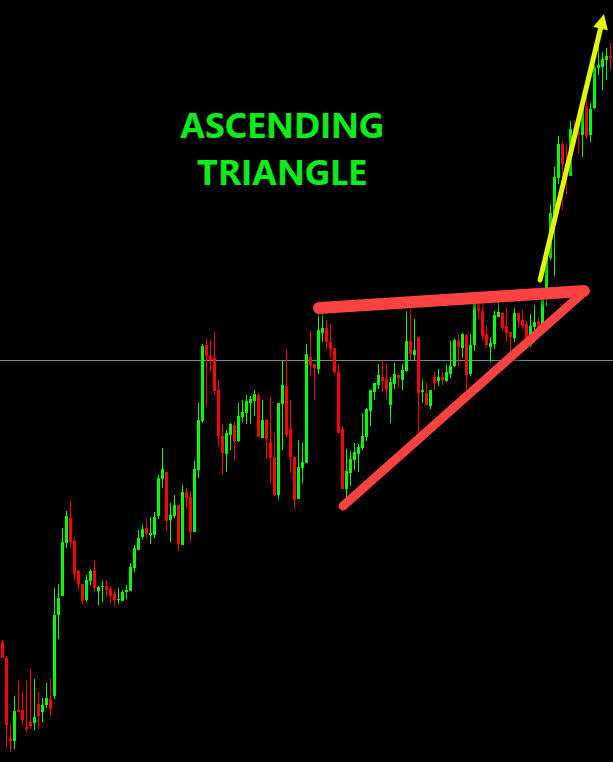
For example, an ascending triangle suggests that buyers repeatedly push price to higher lows (showing strength), yet price repeatedly fails to break a horizontal resistance (sellers defending it). The triangle — then — represents this indecision and mounting pressure. When the a breakout occurs, many traders who were “on the fence” finally commit, creating a move.
• Crowd Memory → Self-Fulfilling Behavior
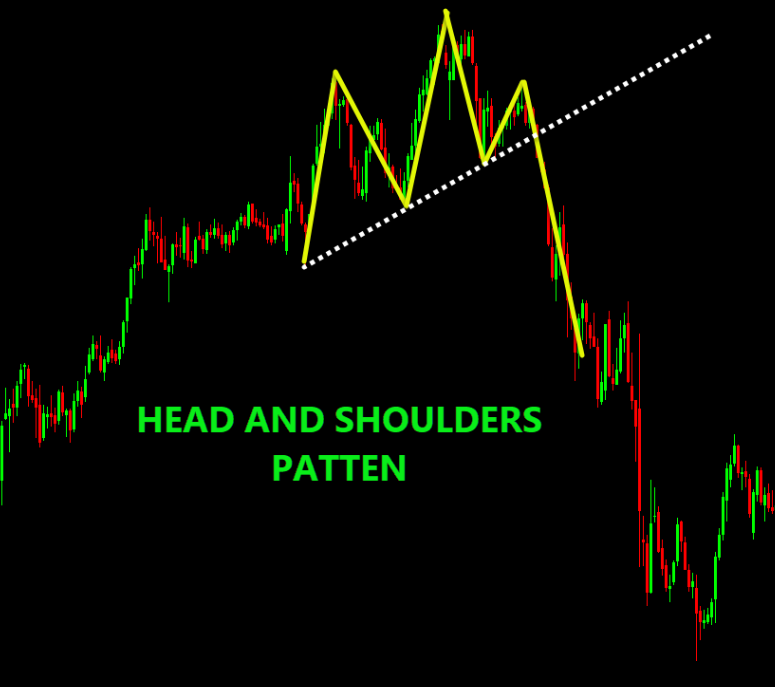
When many traders see a pattern — say, a “HEAD AND SHOULDERS” — they expect a reversal. That expectation leads them to place sell orders, which themselves can push the price down, thus fulfilling their own expectation. This is a classic example of crowd psychology: once enough participants share the same belief, their collective actions can make it a reality and push the prices in the desired direction
• Emotions Fuel Pattern Formation & Breakouts
- During downtrends, panic and fear may produce strong selling pressure — pushing prices down sharply.
- As price falls to a “support zone,” some traders may start buying (or covering losses), creating a bounce. If this happens repeatedly, you might see a reversal pattern.
- Conversely, during uptrends, greed and FOMO may push prices too far, then sellers step in at perceived resistance — forming tops, shoulders, triangles, etc.
- Consolidation patterns (like wedges) often represent market indecision — traders pausing to decide whether to buy more, take profit, or wait until a trigger (news, breakout) causes a collective move.
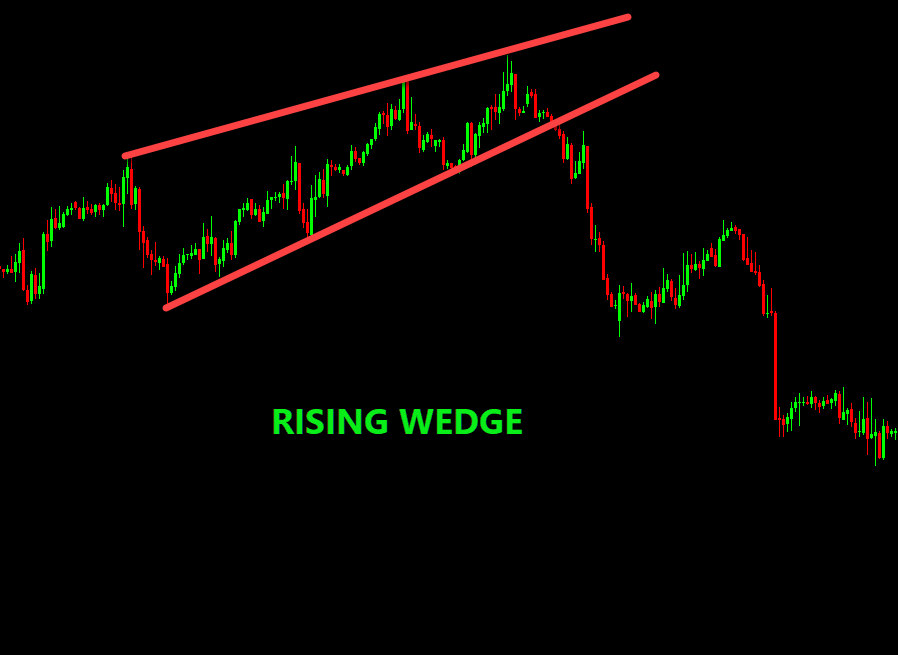
All these emotional swings — fear, greed, hope, hesitation — are what give birth to chart formations.
• Patterns Are Probability, Not Certainty
Important caveat: just because you see a pattern doesn’t guarantee the price will behave as expected. Patterns reflect what human psychology tends to do most of the time under similar conditions — but humans are not robots.
- Sometimes traders misinterpret what they see. The brain tends to find patterns even in randomness (a phenomenon known as “pareidolia” or “clustering illusion”).
- Market circumstances change — news, sentiment shifts, institutional trades — and can invalidate patterns. That’s why even well-formed chart patterns sometimes fail.
Therefore, patterns give an edge, not a guarantee.
How to Use Pattern Psychology in Forex Trading — A Practical Mindset
Here’s how to incorporate “pattern psychology” into your trading toolkit — in a disciplined, probability-based way.
1. Trade Probability, Not Certainty
Treat every chart pattern as a probabilistic edge — not a guarantee. When you enter, account for the possibility of failure. Always use stop-loss, proper position sizing, and risk management.
2. Understand Crowd Behavior, Don’t Blindly Follow Patterns
Before placing a trade, ask yourself: Why did this pattern form? What kind of crowd psychology does it represent?
- If price is consolidating near a strong support zone after a decline, that may mean fear giving way to hopeful buyers.
- If price is forming a topping structure near resistance, watch for signs of weakening upward momentum (volume drop, hesitant candles) — that may hint at a reversal.
This psychological awareness helps you decide whether to go with the pattern, wait for confirmation, or skip.
3. Look for Confirmation — Don’t Rely on the Shape Alone
Use additional signals: volume, momentum indicators, other structural supports/resistances — to confirm that crowd sentiment is aligned with the pattern. A pattern + confirmation = stronger probability.
4. Be Emotionally Aware — Manage Your Own Biases
Like it or dislike it, you are part of the crowd, too. If you spot a “perfect pattern,” feel the urge to trade — pause. Ask: Am I acting on hope/greed/urgency — or on objective logic? Emotional trades usually sabotage even good setups.
5. Accept Losses & Mistakes — They Are Part of Crowd Dynamics
Just like crowd psychology can produce reliable patterns, it can also produce fakeouts. Markets shift — emotions change. Be ready to accept that sometimes the crowd changes its mind. A disciplined trader respects that.
Pattern Psychology: Why It Matters — Especially for Forex
- Forex markets often involve high leverage → emotions amplified. Fear and greed can trigger stronger reactions than other markets. This tends to produce sharper swings and more pronounced patterns.
- Forex is global and 24/5. That means a broad diversity of participants — retail traders, institutions, news-driven players — which makes crowd behavior more complex, but also rich in pattern-forming psychology.
- Because of this complexity, a “pure technical” or “pure fundamental” view often misses half the story. Recognizing the psychological undercurrents behind patterns can give you an edge — especially when combined with your usual technical analysis (support/resistance, candlesticks, fundamentals).
Final Thoughts — Pattern Psychology as a Skill & a Mindset
If you think of Forex charts as merely lines and shapes, you’ll limit yourself. But if you see them as living diaries of human crowd behavior — of fear, greed, indecision, euphoria — then chart patterns become powerful tools.
Mastering pattern psychology doesn’t mean you’ll hit perfect trades every time. It means you’ll understand the why behind moves. You’ll learn to trade with context, not just rules. And over time, this context-aware mindset helps build consistency, resilience, and a realistic edge.