Placing Trades and Managing Positions – A Complete Guide
Step 1: Understanding What “Placing a Trade” Really Means
When you “place a trade,” you’re not just clicking a button—you’re making a decision to risk money with a clear expectation.
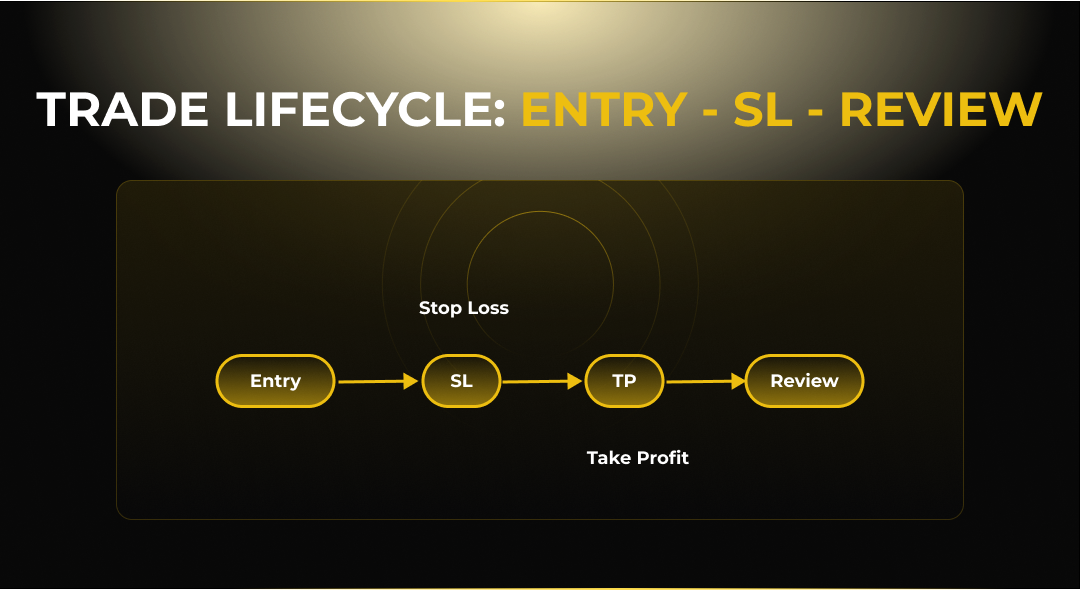
Every trade is built on three key ingredients:
- Entry – Where do you start?
(Example: Buy EUR/USD at 1.1000)
- Stop Loss (SL) – Where do you get out if you’re wrong?
(Example: 1.0950, a 50-pip risk)
- Take Profit (TP) – Where do you cash in if you’re right?
(Example: 1.1100, a 100-pip gain)
Trading without SL/TP is like driving without brakes or a destination—you’ll eventually crash or drift endlessly.
Step 2: The Mechanics of Placing Orders
Market Orders (Instant Execution)
You buy/sell right now at the current price.
- Best when: You want to catch immediate movement.
- Risk: Slippage in volatile markets.
Example:
NFP news pushes EUR/USD up fast—you hit “Buy Market” and enter instantly.
Pending Orders (Set & Forget)
You pre-set conditions:
- Buy Limit: Buy below the current price (catch retracements).
- Sell Limit: Sell above the current price (fade rallies).
- Buy Stop: Buy above the current price (catch breakouts).
- Sell Stop: Sell below the current price (catch breakdowns).
Example:
Gold is at $1,920. You think if it breaks $1,930, it’ll rally. Place a Buy Stop at $1,930 with SL $1,910.
This lets the market come to you instead of chasing it.
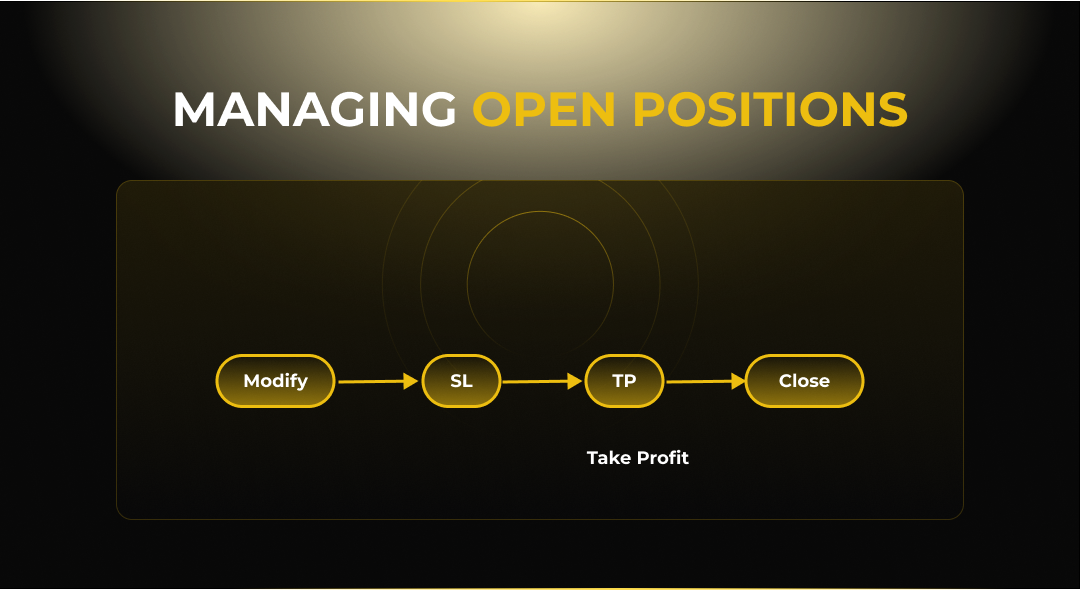
Step 3: Managing Open Positions
Placing a trade is only half the job. Managing it wisely is where traders separate themselves from gamblers.
 Here’s how:
1. Stop Loss Management
- Static SL: Place it once, leave it untouched. Best for beginners.
- Dynamic SL: Adjust based on new price action. Example: move SL below new swing lows in a trend.
- Trailing Stop: Follows price automatically. Example: trail 20 pips behind price.
This is like tightening your safety belt as the car speeds up.
2. Break-Even Protection
Once your trade is comfortably in profit (say, +30 pips), move SL to entry price.
- Worst case: You walk away with zero loss.
- Best case: You ride a winner risk-free.
3. Scaling In & Out
- Scaling In: Adding to winning positions gradually.
(Danger: Overexposure if done wrong).
- Scaling Out: Closing part of your trade to lock profit.
Example: Close half at +50 pips, let the rest run.
This method reduces emotional stress. Even if the second half fails, you still booked profit.
4. Monitoring Emotions
- If you feel panic, reduce lot size next time.
- If you feel greedy, force yourself to write down your plan before adding more positions.
Step 4: Real Trading Scenarios
Scenario A: The Trend Follower
- You Buy GBP/USD at 1.2500, SL 1.2450, TP 1.2600.
- Price climbs to 1.2550.
- Action: Move SL to 1.2500 (break-even).
- Outcome: Zero risk, ride the trend.
Lesson: Secure your seatbelt early in a moving car.
Scenario B: The Reversal Catcher
- EUR/JPY falls to 150.00, you Buy at 150.20.
- SL at 149.50, TP at 151.20.
- Price spikes to 150.80.
- Action: Close half, move SL to 150.20.
- Outcome: Booked profit + risk-free trade.
Lesson: Lock in small wins to free your mind.
Scenario C: The Scalper
- On cTrader, you Sell Gold at $1,925.
- You drag your SL line visually to $1,928 and TP to $1,918.
- Within minutes, TP hits.
- Outcome: Quick, small profit.
Lesson: Scalping is about speed, clarity, and discipline—not guesswork.
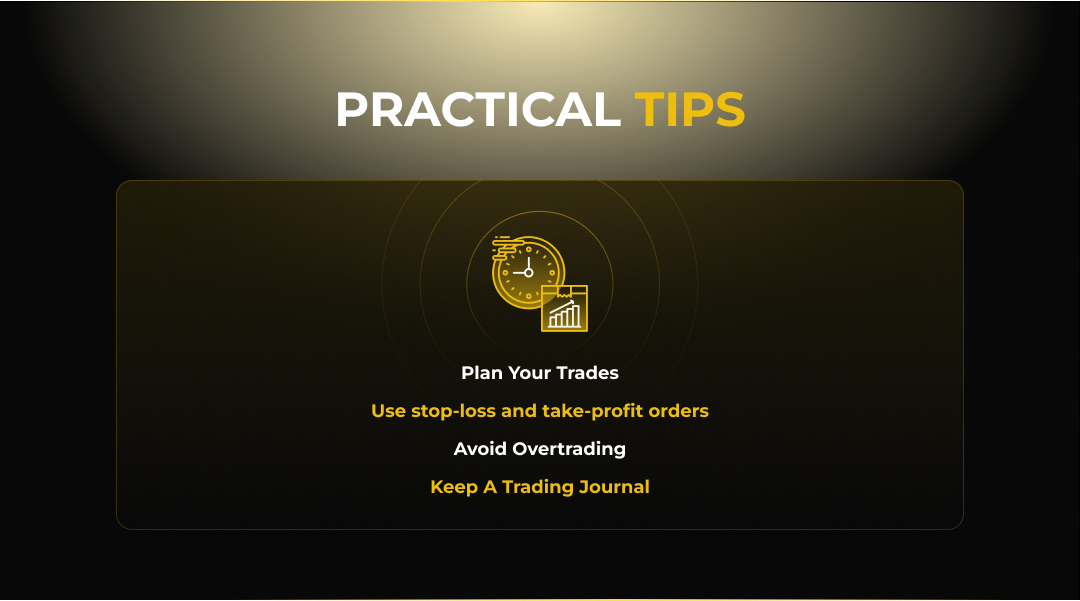
- Always pre-plan: Entry, SL, TP must be defined before entry.
- One trade = one story: Don’t mix strategies in a single trade.
- Use risk % not money: Risk 1–2% of your account, not “100$ because it feels right.”
- Journal trades: Include screenshots + emotions + results.
- Don’t move SL further away: That’s digging your own hole.
- Detach ego: The market doesn’t care if you’re “right.”
Final Thoughts
Placing trades is like boarding a plane—it’s exciting, but your real job begins once you’re in the air. Managing positions is your pilot’s skill: adjusting altitude, checking fuel, keeping passengers safe.
The trade itself is never guaranteed. But how you manage it—that is always under your control.
Master this, and you’ll find peace in trading, not chaos.