
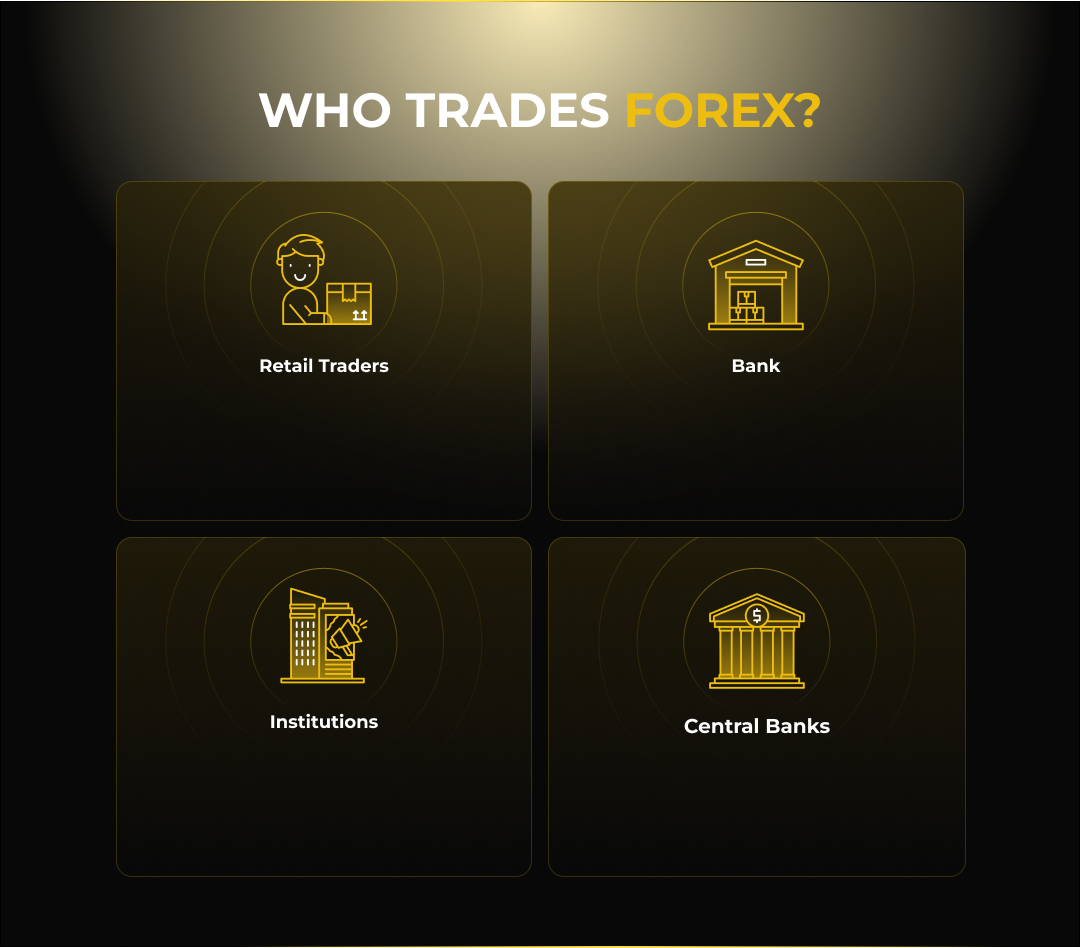
 When people first hear about Forex—the foreign exchange market—they usually imagine a room full of traders shouting at screens or a mysterious computer algorithm moving currencies. But the truth is simpler: Forex is like a global marketplace, and it has different types of shoppers.
Some are everyday people like you and me, some are gigantic banks moving billions, and some are powerful institutions shaping the flow of money around the world. Understanding who trades Forex is like understanding the characters in a movie—you’ll enjoy the story a lot more when you know the roles each character plays.
Let’s break it down.
When people first hear about Forex—the foreign exchange market—they usually imagine a room full of traders shouting at screens or a mysterious computer algorithm moving currencies. But the truth is simpler: Forex is like a global marketplace, and it has different types of shoppers.
Some are everyday people like you and me, some are gigantic banks moving billions, and some are powerful institutions shaping the flow of money around the world. Understanding who trades Forex is like understanding the characters in a movie—you’ll enjoy the story a lot more when you know the roles each character plays.
Let’s break it down.
Retail Traders: The Everyday Adventurers
Retail traders are the most relatable group—they are us. These are individuals who open accounts with Forex brokers and trade from their laptops, phones, or desktops. Thanks to modern technology, anyone with an internet connection can participate in the largest financial market in the world. Why they trade:- To make extra income or even a full-time living.
- To enjoy the intellectual challenge of trading.
- For freedom and flexibility—since Forex is open 24 hours a day, 5 days a week.
- Strengths: Easy access, low starting capital, trading from anywhere.
- Weaknesses: Lack of experience, emotional decision-making, and exposure to market manipulation by bigger players.
Banks: The Currency Giants
Banks are the backbone of the Forex market. Without them, there would be no liquidity and no pricing system. Who they are:- Central banks (like the Federal Reserve, ECB, or Bank of Japan).
- Commercial banks (like Citibank, Deutsche Bank, HSBC).
- Investment banks that also engage in proprietary trading.
- To serve clients – For example, a multinational company needing to convert millions of euros into dollars.
- To manage risks – Banks often hedge their exposure when lending or investing globally.
- To make profit – Proprietary trading desks speculate on currency moves just like traders do, but with much larger amounts.
- Strengths: Access to interbank networks, trillions in liquidity, advanced tech.
- Weaknesses: Slower decision-making due to regulations, bureaucratic approval processes.
Institutions & Hedge Funds: The Master Strategists
Institutions are like the chess grandmasters of the Forex world. These include hedge funds, investment firms, and multinational corporations. They are sophisticated, data-driven, and often operate behind the scenes. Why they trade Forex:- Hedging: A company like Toyota might need to protect itself from yen fluctuations since it sells cars worldwide.
- Speculation: Hedge funds place massive bets on currency moves. George Soros, for instance, famously “broke the Bank of England” by shorting the British pound in 1992.
- Arbitrage: Institutions often exploit tiny price differences across different platforms using powerful algorithms.
- Strengths: Deep pockets, world-class analysts, cutting-edge technology.
- Weaknesses: Vulnerable to sudden market shocks (like financial crises) and strict investor expectations.
Central Banks: The Market Movers
Although not always mentioned in beginner guides, central banks deserve their own spotlight. Why they trade: Central banks don’t trade for profit. Their goal is economic stability. They step into the Forex market to:- Control inflation.
- Stabilize their national currency.
- Boost exports by keeping their currency competitive.
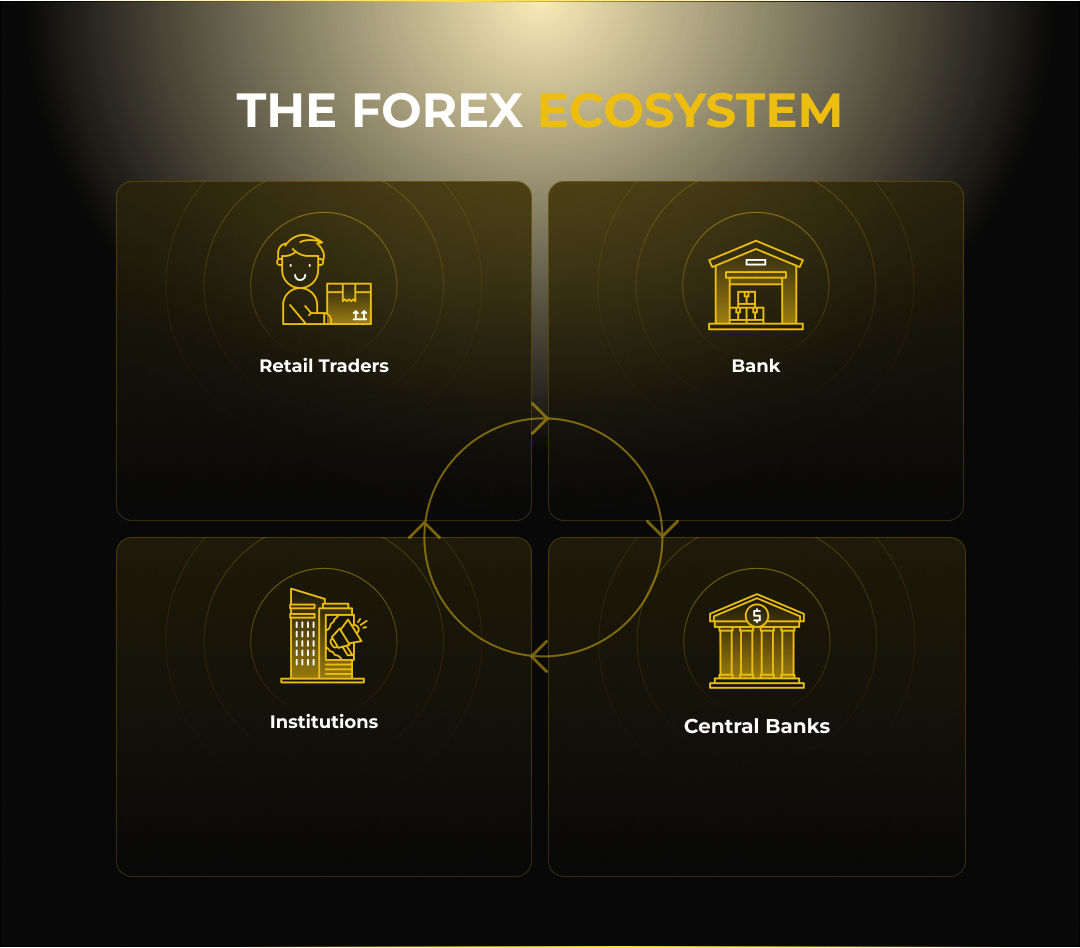 Now, let’s put it all together.
- Retail traders add volume and liquidity but follow trends.
- Banks create liquidity and serve as intermediaries.
- Institutions move markets with strategic, large trades.
- Central banks intervene when the system needs balance.
- Retail traders are the audience—many voices creating energy.
- Banks are the sound engineers—making sure everything flows.
- Institutions are the musicians—shaping the performance.
- Central banks are the conductors—ensuring harmony when things get out of tune.
Why This Matters for You
As a trader, knowing who the players are gives you a huge advantage:- You stop blaming the market for being “unfair” and start respecting how it works.
- You learn to follow big money flows (institutions and banks) instead of fighting them.
Final Thoughts
The Forex market isn’t some dark, mysterious casino. It’s a marketplace where different participants with different goals meet every single day.- Retail traders bring passion and flexibility.
- Banks bring stability and liquidity.
- Institutions bring strategy and size.
- Central banks bring control and order.