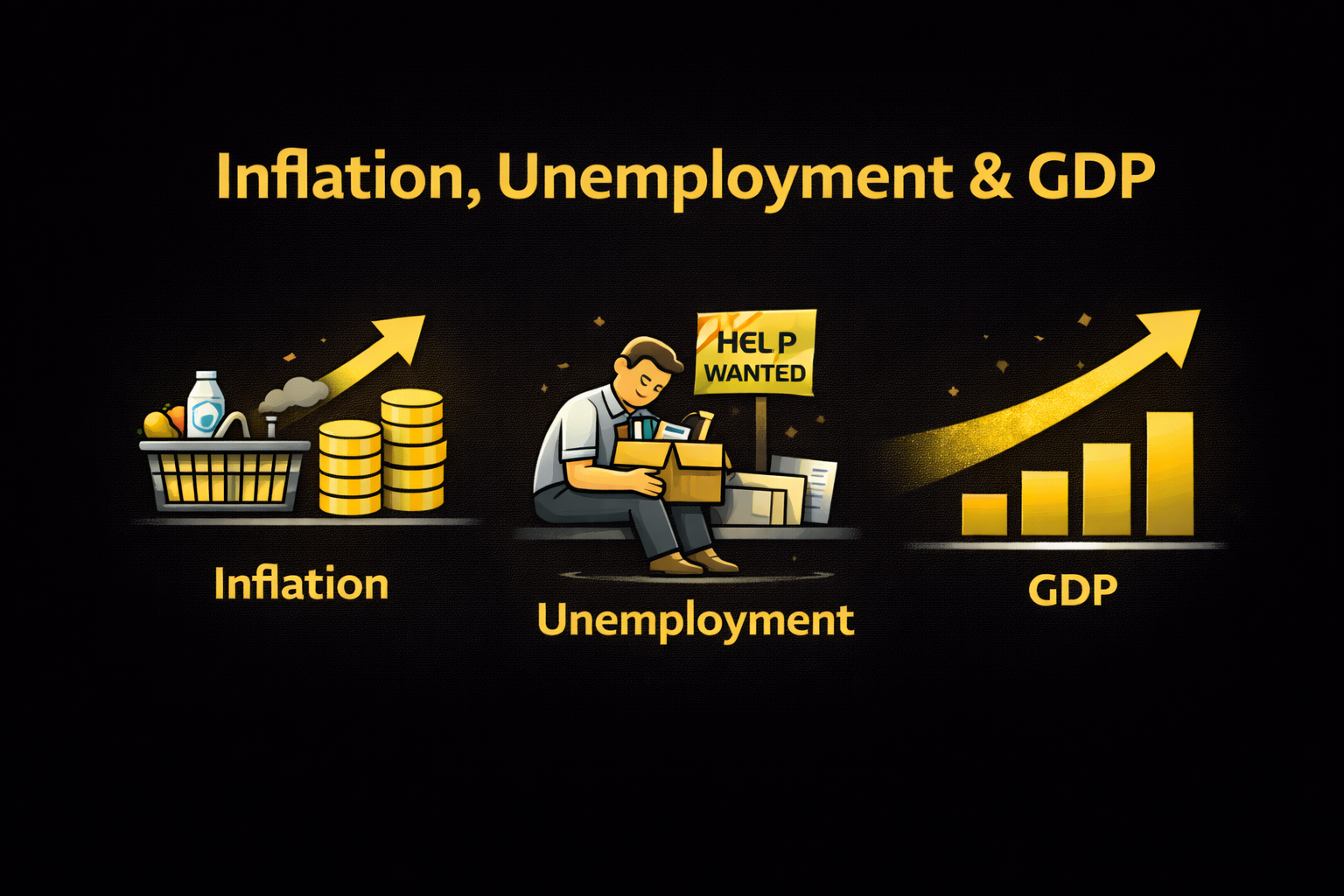
When you first dive into Forex trading, terms like inflation, unemployment, and GDP might sound like dry economics concepts — not directly connected to price charts and currency pairs. But nothing could be further from the truth.
These indicators are the heartbeat of an economy. They shape monetary policy, influence investor expectations, and drive major currency moves. Understanding them deeply isn’t just useful — it’s essential for serious Forex traders who want to align their strategies with real economic forces.
In this article, we’ll explore:
No jargon, no confusion — only clarity.
1. What Is Inflation: What Do CPI & PPI Really Mean?
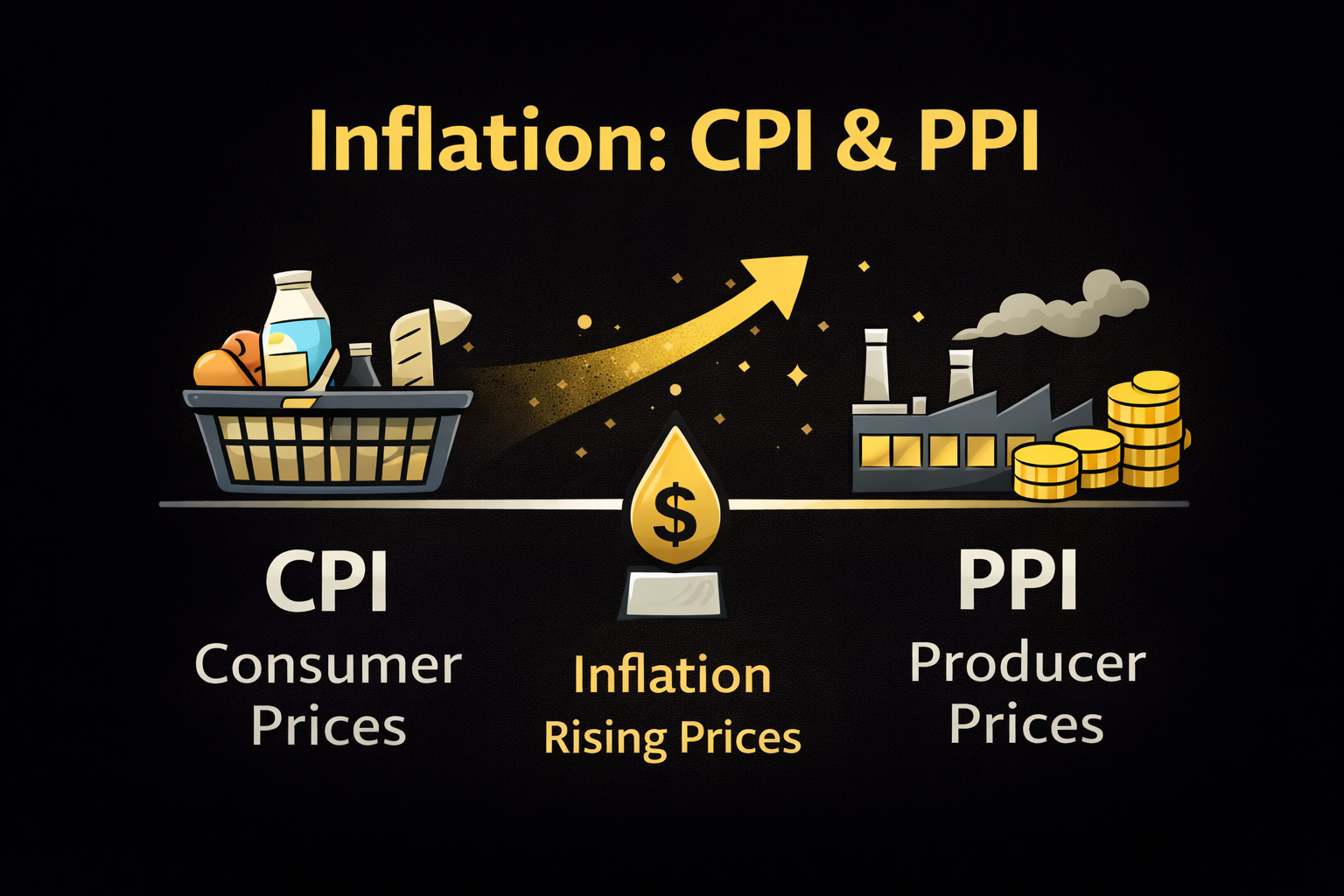
Inflation is the broad term for how quickly prices rise over time. It tells us how fast money is losing purchasing power. But we don’t just talk about “inflation” in general — we measure it with several key gauges.
CPI — Consumer Price Index
CPI tracks the price changes of a basket of goods and services that typical consumers buy — things like food, rent, utilities, and gasoline.
In simple terms:
When CPI rises faster than expected, money buys less — and that affects how markets view the currency.
PPI — Producer Price Index
PPI measures changes in prices that producers receive for goods and services at the wholesale level — before they reach consumers.
In simple terms:
Since these costs often eventually pass on to consumers, PPI can lead CPI and signal future inflation trends.
2. Why Inflation Matters in Forex
Currencies don’t exist in a vacuum. Central banks — like the Federal Reserve, ECB, Bank of England, or Bank of Japan — watch inflation closely because it guides interest rate decisions.
Here’s the direct link:
- High inflation → central bank may raise interest rates (to cool down price growth)
- Low inflation → central bank may cut or hold rates (to stimulate spending)
Why does that matter for Forex?
Because higher interest rates often attract foreign capital, making that currency stronger. Lower rates can weaken a currency as investors seek better returns elsewhere.
So when CPI or PPI surprises (greater or lower than expected), Forex markets react quickly — often before central bank meetings.
Example:
If the U.S. CPI is much stronger than forecast, traders might price in a more hawkish Fed (higher rates), boosting USD strength.
3. Unemployment — More Than Just Job Numbers
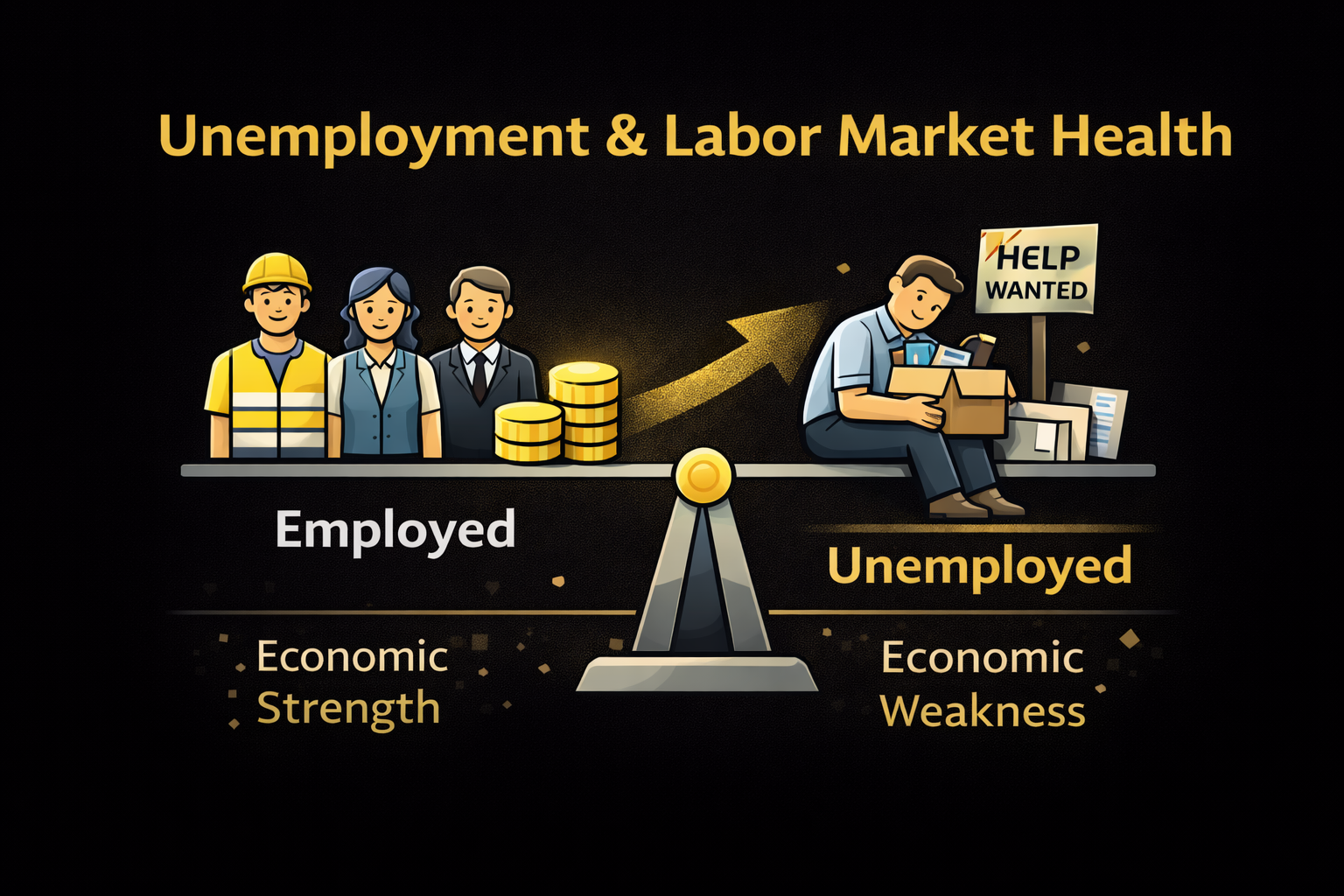
Unemployment tells us how many people can’t find jobs. It’s not only a social issue — it’s an economic thermometer.
Key Unemployment Metrics in Forex
- Unemployment Rate – % of people actively looking for work but not employed
- NFP (Non-Farm Payrolls) – measures job changes excluding farm jobs (major for USD)
- Participation Rate – shows how many people of working age are either employed or actively looking for work.
Why Forex Traders Care
A strong job market means:
When unemployment falls faster than expected, it signals economic strength, potentially causing:
Conversely, rising unemployment points to weak demand — pressure on growth, weaker currency outlook.
4. GDP — The Big Picture of Economic Activity
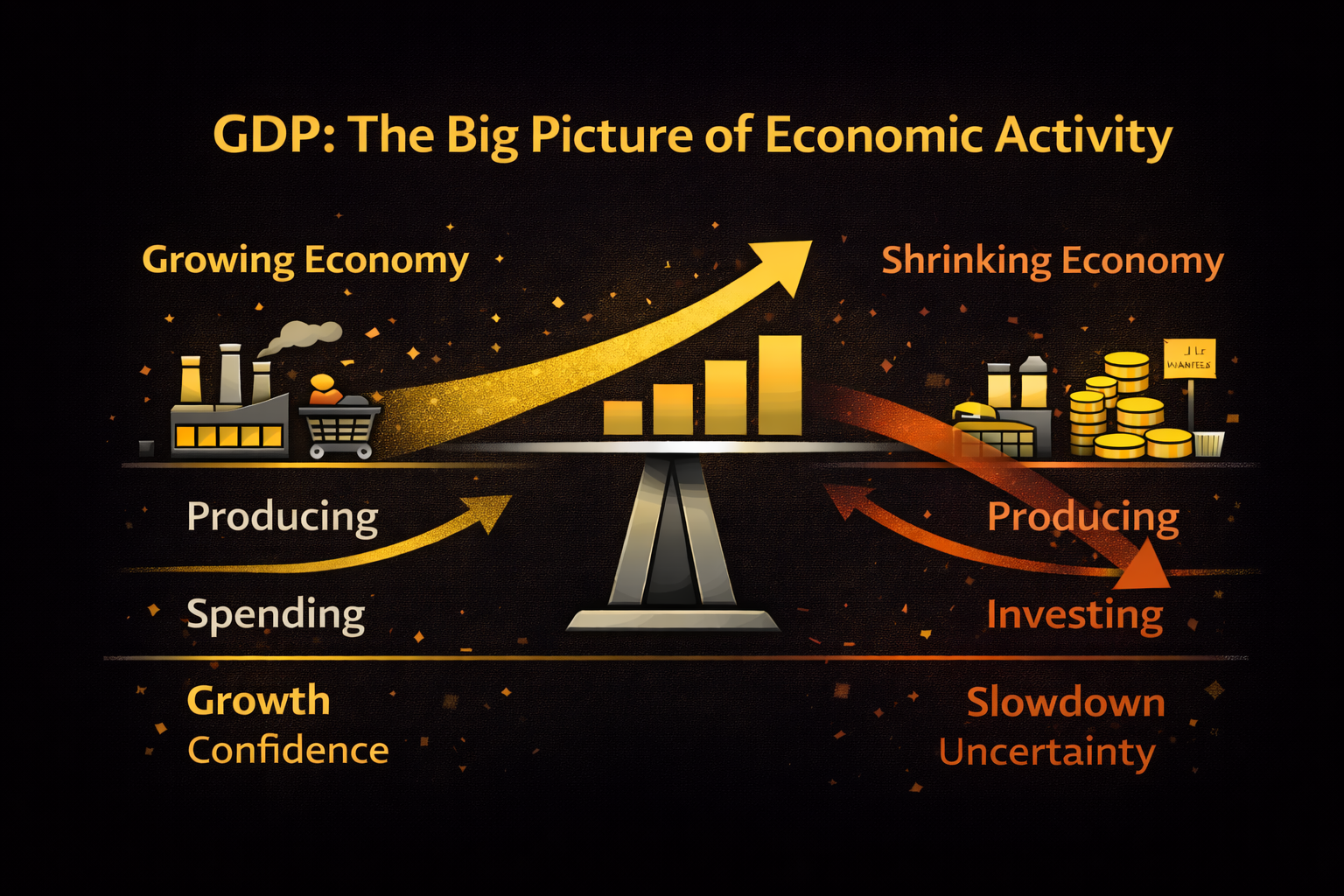
GDP (Gross Domestic Product) is a way to estimate the overall size of an economy by adding up the value of goods and services created within a country over time.
Basically, GDP can be portrayed as the speedometer of an economy:
Forex watches GDP because:
- It reflects economic health directly
- It signals future monetary policy shifts
- It affects investor confidence
Real vs. Nominal GDP
- Nominal GDP = measures the value of all goods and services using today’s market prices, without adjusting for inflation.
- Real GDP = adjusted for inflation (true growth)
Forex traders focus on Real GDP because it shows true economic expansion or contraction.
5. How Traders Use These Indicators
The forex market reacts not just to the numbers themselves, but to “surprises” too.
📌 Actual vs Forecast is the real driver
If actual inflation, unemployment, or GDP differs significantly from consensus expectations, markets move forcefully — often within seconds of the release.
Typical Market Reactions
| Indicator Surprise | Likely Forex Reaction |
|---|---|
| Higher inflation than expected | Currency strengthens (rate-hike priced in) |
| Lower inflation than expected | Currency weakens |
| Lower unemployment than expected | Currency strengthens |
| Higher unemployment than expected | Currency weakens |
| Stronger GDP than expected | Currency strengthens |
| Weaker GDP than expected | Currency weakens |
Note: Reaction magnitude depends on how big the surprise is and the economic context.
6. A Practical Trading Mindset
If you want to trade news or position yourself ahead of releases, here’s a simple framework:
Step 1 — Know the Consensus
Before the release, find how economists expect the numbers to come out.
Step 2 — Compare Actual vs Forecast
After release:
Step 3 — Watch Market Response
Often:
- Price moves fast initially
- Then retraces or consolidates as traders reassess
Don’t just watch the number — watch the market reaction.
7. Remember: Context Matters
These indicators don’t act in isolation. A strong CPI might not strengthen a currency if:
Markets are forward-looking — and they always price expectations before reality arrives.
8. Final Takeaways
Here’s what you should commit to memory:
Trade the context — not just the numbers.
Learning how fundamental data intersects with market psychology is where smart traders create an edge.