In Forex trading, information is everywhere. Strategies, indicators, and market opinions are easy to find. Yet despite this abundance of knowledge, many traders struggle to achieve stable results.
The reason is not a lack of understanding — it is the gap between preparing a trade and carrying it out in real time.
This article breaks down those two stages clearly, shows why they often fall apart, and explains how aligning them can dramatically improve consistency.
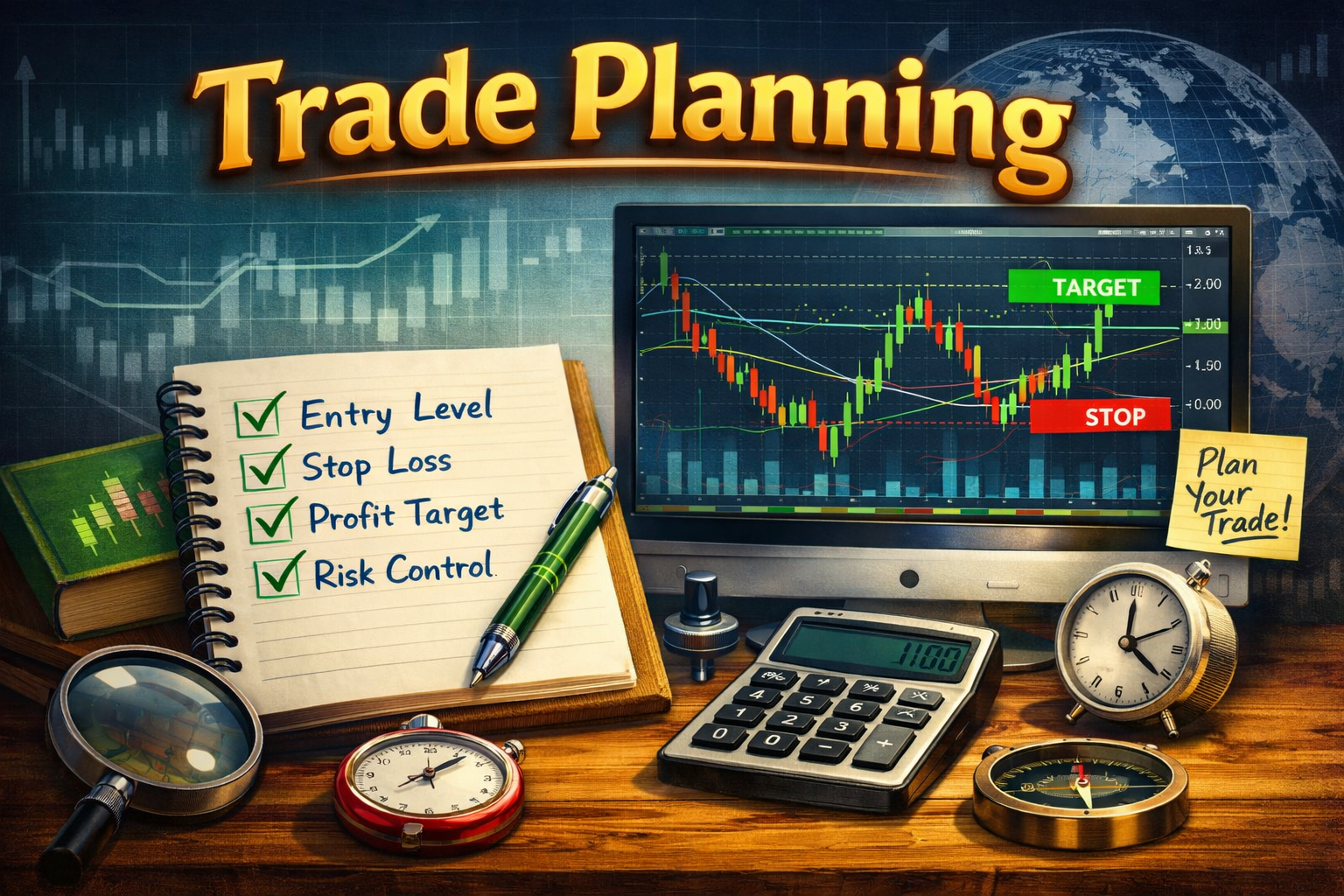
1. Trade Planning: Making Decisions Before the Pressure Starts
What Trade Planning Actually Is
Trade planning is the process of making all important decisions before any position is opened.
At this stage:
- No money is fluctuating
- No candles are moving against you
- No emotions are demanding quick reactions
You are thinking ahead, not reacting.
A proper plan defines:
- When a trade idea is valid
- When it is no longer valid
- How much exposure do you allow
- Where profits are logically placed
- Whether the setup fits your trading approach
Planning is not about forecasting price direction. It is about setting boundaries and prevent you making random decisions.
Core Elements of a Well-Built Trade Plan
A solid plan usually contains the following components:
Market environment
Is the market trending, ranging, or transitioning?
Entry logic
Specific conditions that must be present before entering — not vague zones.
Risk definition
A clear exit level that limits downside based on structure, not comfort.
Profit logic
Targets derived from market behavior, not expectations.
Management rules
Guidelines for what you will and will not do once the trade is active.
When these elements are decided in advance, the trade has direction before stress enters the picture.
Why Planning Changes Everything
Without a plan, traders react to every movement and involve emotions. With a plan, movements are evaluated calmly and usually emotions are controlled.
Strong planning:
- Reduces impulsive decisions
- Prevents random entries
- Keeps losses controlled
- Turns trading into a structured routine instead of a guessing game
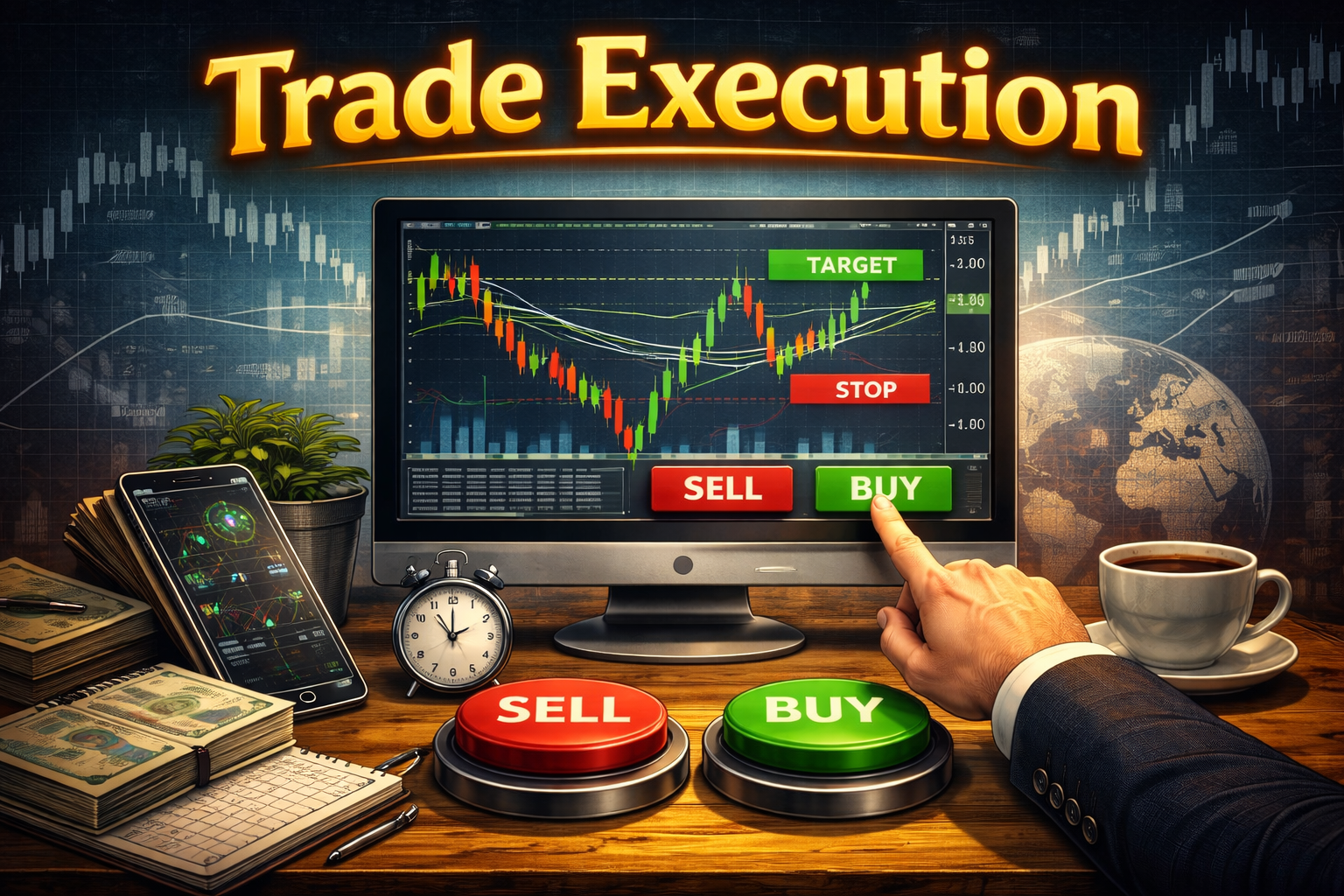
2. Trade Execution: Performing While Uncertainty Is Real
What Execution Really Means
Execution begins the moment a trade is live.
Now price moves unpredictably, profits fluctuate, and losses become possible. This is where discipline matters more than analysis.
Execution is the ability to:
- Enter only when conditions are met
- Manage the position without improvisation
- Respect exists without negotiation
- Follow rules even when emotions disagree
Execution is not about speed or intelligence. It is about self-control under pressure.
Why Execution Breaks Down
Many traders prepare solid plans — but struggle once real money is involved.
That’s because execution happens alongside thoughts like:
- “I should give this trade a bit more space.”
- “What if the price doesn’t come back?”
- “I don’t want to lose what I’ve already made.”
These thoughts are natural. The problem begins when they override predefined rules.
Execution Is a Skill That Must Be Trained
Good execution looks like this:
- Entries are taken at planned prices
- Stops remain where they belong
- Profits are allowed to develop
- Losses are accepted without delay
This behavior is learned through repetition and review, not motivation.
3. Planning and Execution: Same Goal, Different Challenges
| Aspect | Planning | Execution |
|---|---|---|
| When it happens | Before entry | After entry |
| Mental state | Calm, objective | Emotional, reactive |
| Main demand | Clarity | Discipline |
| Risk | Defined logically | Felt emotionally |
| Difficulty | Thinking clearly | Acting consistently |
Planning requires understanding. Execution requires restraint.
Most traders don’t fail because their plans are weak — they fail because their behavior changes once the trade is live.
4. The Silent Performance Killer: Inconsistency Between the Two
A common trader’s experience looks like this:
- The analysis makes sense
- The setup is valid
- The strategy is proven
- Results remain unstable
Why?
Because the plan was altered during execution.
Typical examples include:
- Late entries due to hesitation
- Moving stop levels to avoid being wrong
- Taking profits too early out of fear
- Trading setups that were never planned
Over time, these small deviations quietly erode performance.
5. How to Bring Planning and Execution Together
Step 1 — Finalize Decisions Before Entry
Before clicking buy or sell, you should already know:
- Entry
- Exit
- Risk
- Objective
If something feels unclear beforehand, it will feel overwhelming afterward.
Step 2 — Simplify Trade Management
The fewer decisions required during a trade, the better the execution becomes.
Predefined orders reduce emotional interference.
Step 3 — Evaluate Behavior, Not Just Profit
After each trade, review:
- Did I follow my rules?
- Where did I intervene emotionally?
- Was the outcome caused by the market or my actions?
A losing trade can still be a successful execution.
Step 4 — Respect Waiting as a Skill
Being flat is part of trading.
Patience protects capital. Forced trades do not.
Step 5 — Accept Risk Before Entering
Loss should never come as a shock.
When the downside is accepted beforehand, reactions during the trade become calmer and more controlled.
6. Where Consistency Really Comes From
Consistency is not found in better indicators or complex strategies.
It comes from alignment:
- Clear preparation
- Disciplined execution
- Honest review
When these work together, trading shifts from emotional decision-making to structured performance.
Final Thoughts
Forex trading rewards clarity before action and discipline during action.
Those who master both planning and execution stop reacting to the market — and start operating within it.
That is how trading becomes sustainable, measurable, and professional.
One well-planned trade. One well-executed decision at a time.