Reviewing Your Trades — The Step-by-Step Path to Becoming a Better Trader
If you want to improve at Forex trading, there’s one habit that separates average traders from consistently profitable ones: trade review. Not just logging trades—but analyzing them in a way that teaches you something real.
Many traders wonder, “How did this trade work?” or “What went wrong here?” If that sounds familiar, you’re in the right place. Because skills in trading grow not only from the trades you make, but also and mainly from the wisdom you extract from every trade you take.
This article walks you through exactly how to review your trades, why it matters, and how to do it in a way that truly improves your performance—without overcomplication.

Why Reviewing Your Forex Trades Isn’t Optional
Imagine a golfer who never checks his swing on camera. Or a musician who never listens back to recordings. Sounds strange, right? Yet many Forex traders trade hundreds of times without ever reviewing what happened.
Here’s what trade review gives you:
Without review, trading becomes guesswork. With review, trading becomes a learning system.
Step 1 — Start With an Honest Trading Journal
Trade reviews only work if you’ve recorded your trades properly. A good journal captures:
- Date and time
- Currency pair or other instrument you trade
- Entry and exit prices
- Stop-loss and take-profit levels
- Position size
- Reason for the entries, and strategies used
- Outcome (win/loss)
- Notes about what happened
Taking screenshots of your trades will also help reviewing the trades later.
A journal isn’t a chore—it’s your feedback engine.
From here, your review becomes meaningful.
Step 2 — Categorize Your Trades
Before diving into details, group similar types of trades. Traders often miss patterns because they look at trades as isolated events.
Try these categories:
** Add any other category that is important to you.
Grouping trades helps you see what types of setups work for you—and which ones don’t.
For example:
“Trend continuation trades clearly support my account growth, whereas breakout attempts have been far less effective.”
Now you have real insight—not random performance.
Step 3 — Identify Your Core Patterns
Once trades are grouped, look for patterns:
Here’s a simple example:
“I enter pullbacks too early and get stopped out before the real continuation move.”
This is the best way to learn what works for you, what does not, and what should be done differently or avoided.
Patterns like this are gold — they tell you exactly what to fix.
Step 4 — Assess Your Risk Management
Far too many traders focus only on entry and exit, ignoring risk behavior.
When reviewing, ask:
Your wins and losses won’t just tell you what happened—they tell you how you managed the trade emotionally and technically.
For example:
“In winning trades, I stuck to my stop. In losing trades, I moved my stop and lost more than planned.”
That’s not a rule violation—that’s emotional influence. Now you know it, and now you can fix it.
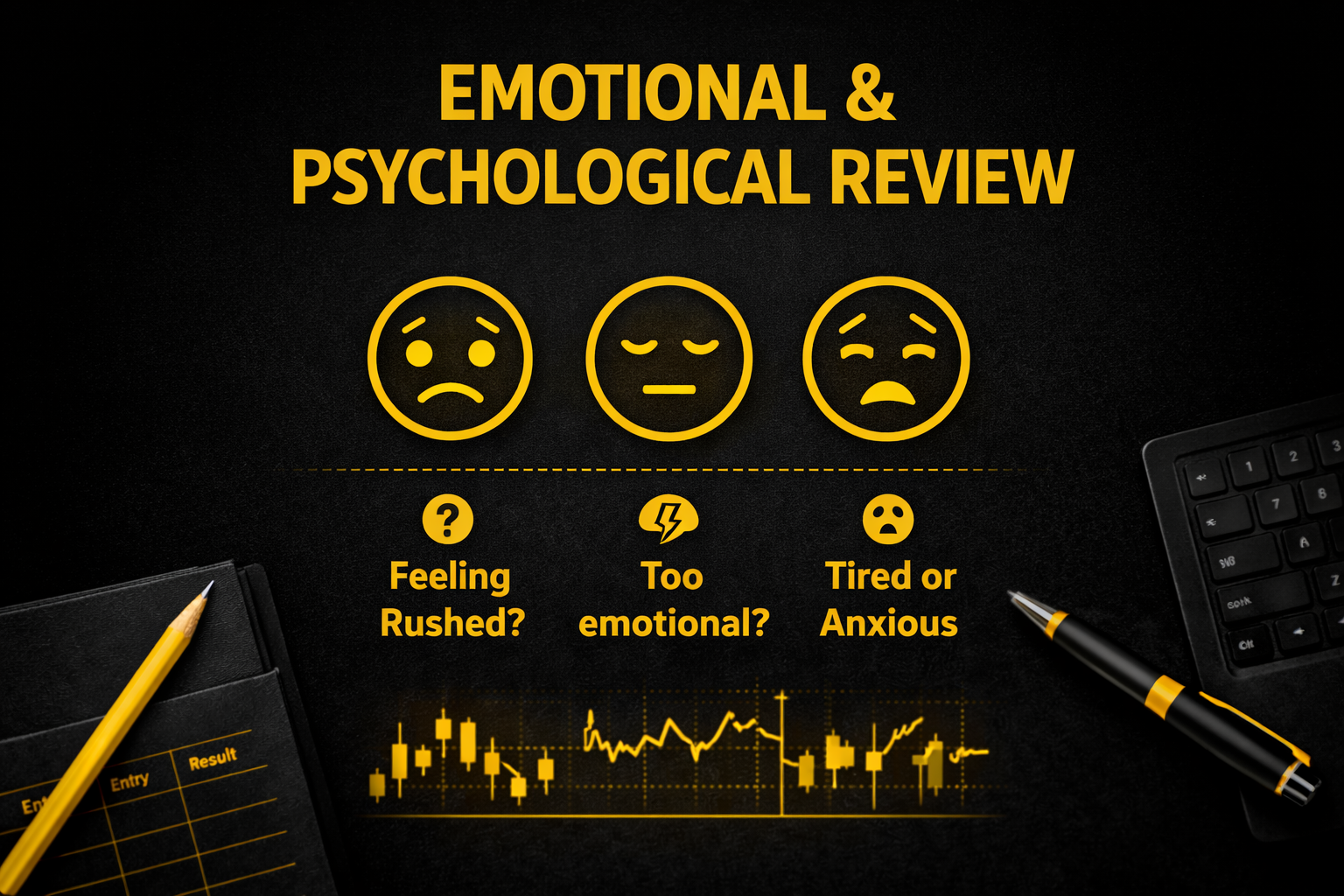
Step 5 — Emotional & Psychological Review
Trades aren’t just technical—they’re emotional.
During your review, record how you felt:
- Was I confident?
- Was I anxious? Tires? Exhausted?
- Did I rush or hesitate?
You might find something like:
“When I was tired, I entered impulsively.”
These emotional patterns matter more than you think—they explain behavior that technical data alone cannot.
Step 6 — Quantify Your Results
Numbers help you measure progress.
Create a simple performance snapshot:
Example:
| Setup Type | Win Rate | Avg R:R |
|---|---|---|
| Trend Trades | 68% | 2.1 |
| Pullbacks | 55% | 1.8 |
| Breakouts | 32% | 1.2 |
This tells you instantly where your edge is—and where it’s not.
Step 7 — Create Actionable Rules from Your Review
Now here’s the most important part—action.
After you review, ask:
Example rules might be:
- Only trade breakouts if there’s a retest
- Avoid trading 30 minutes before news
- Always use a minimum 2:1 reward:risk
Turn your review into rules. Traders without rules are just gamblers.
Step 8 — Reflect Weekly, Not Just Quarterly
Trade review shouldn’t be a once-in-a-blue-moon task.
Weekly review gives you:
Small reviews consistently are more powerful than big reviews rarely.
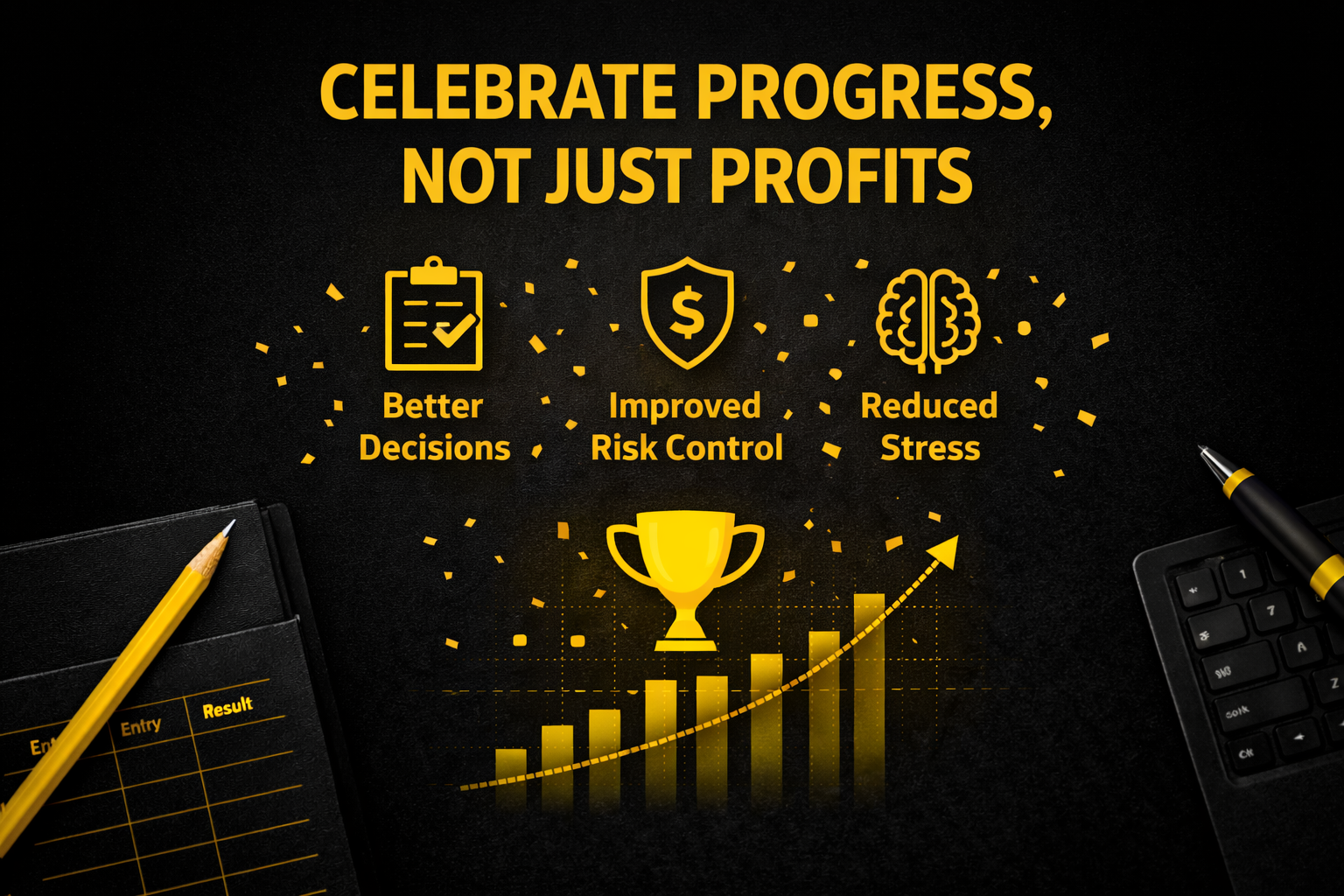
Step 9 — Celebrate Progress, Not Just Profits
Improvement isn’t only about positive P/L.
Ask yourself:
When you celebrate process improvements, discipline grows—and profits often follow.
Final Thoughts — Reviewing Trades Is Your Shortcut to Growth
Reviewing your trades isn’t about reliving losses or wins — It’s about understanding the story behind them.
When you analyze trades with depth and honesty, you move from guesswork into a self-teaching feedback loop.
You become a trader who:
That’s not luck—that’s skill.
Review your trades with intention. Learn with purpose. Trade with confidence.
Your best trades are not the ones you enter—they’re the ones you learn from.