
Trading Journal Examples
If you asked ten traders what the most important tool for improvement is, only a few would mention their trading journal. Yet this simple habit—recording your trades with intention—can be one of the most powerful things you do as a Forex trader. A trading journal isn’t just a list of trades. It’s a mirror that shows your strengths, mistakes, and patterns over time. Done right, it turns chaos into clarity. In this article, you’ll discover practical journal examples, learn how to structure your entries, and see why even small details can make a huge difference in your trading performance.✅ Why You Need a Trading Journal
Think of a trading journal as your personal coaching tool. It’s a mirror to all your actions as a trader. Without it:- You repeat the same mistakes.
- You forget why you entered or exited a trade and how they were executed.
- Your progress becomes random rather than intentional.
✔ You see what works and what doesn’t
✔ You become accountable to your own rules
✔ You learn faster than simply watching charts
A journal doesn’t judge you—it guides and teaches you.

📌 What a Good Forex Trading Journal Includes
A strong journal does more than record numbers. It answers why and how you traded. Here’s what every meaningful trade record should capture:- Date and Time
- Currency Pair
- Entry/Exit Price
- Direction (Buy/Sell)
- Stop Loss & Take Profit
- Trade Size
- Reason for Entry
- Market Context
- Emotional State
- Outcome & Lessons
📊 Example #1 — The Trend-Following Trade
Date: 2025-11-10 Pair: EUR/USD Direction: Buy Entry: 1.10930 Stop Loss: 1.10650 Take Profit: 1.15725 Position Size: 0.5 lot Reason for Entry: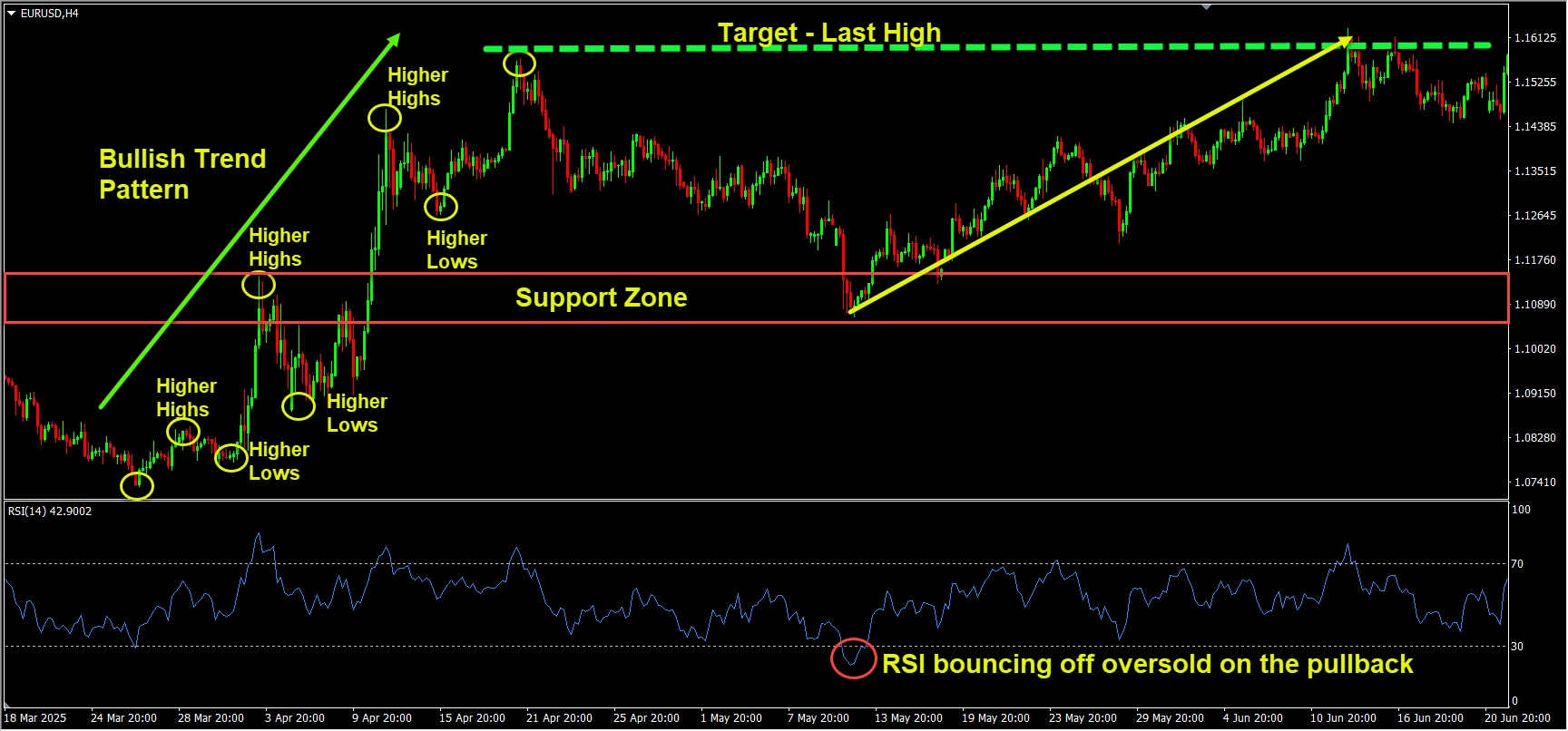 Bullish trend pattern followed by a pullback into the support area on H4. RSI is bouncing off oversold on the pullback.
Market Context:
Bullish trend pattern followed by a pullback into the support area on H4. RSI is bouncing off oversold on the pullback.
Market Context:
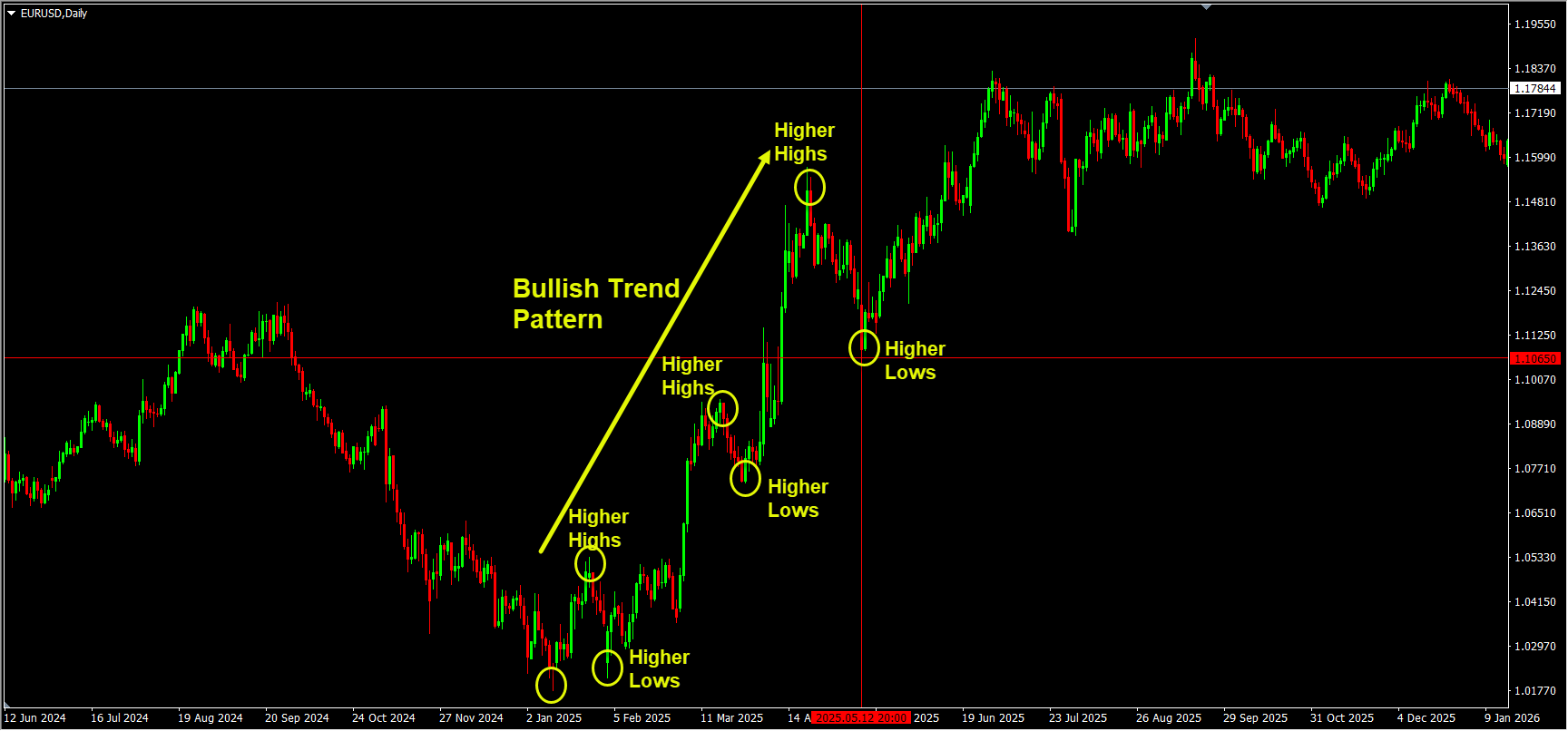 Bullish trend on D1.
Emotional State:
Calm, confident, no hurry. Took trade only after the setup fully aligned.
Outcome:
Hit take profit. +450 pips.
Notes & Lessons:
Trend continuation worked well. Entry on pullback gave good risk/reward.
Bullish trend on D1.
Emotional State:
Calm, confident, no hurry. Took trade only after the setup fully aligned.
Outcome:
Hit take profit. +450 pips.
Notes & Lessons:
Trend continuation worked well. Entry on pullback gave good risk/reward.
📉 Example #2 — The Breakout Mistake
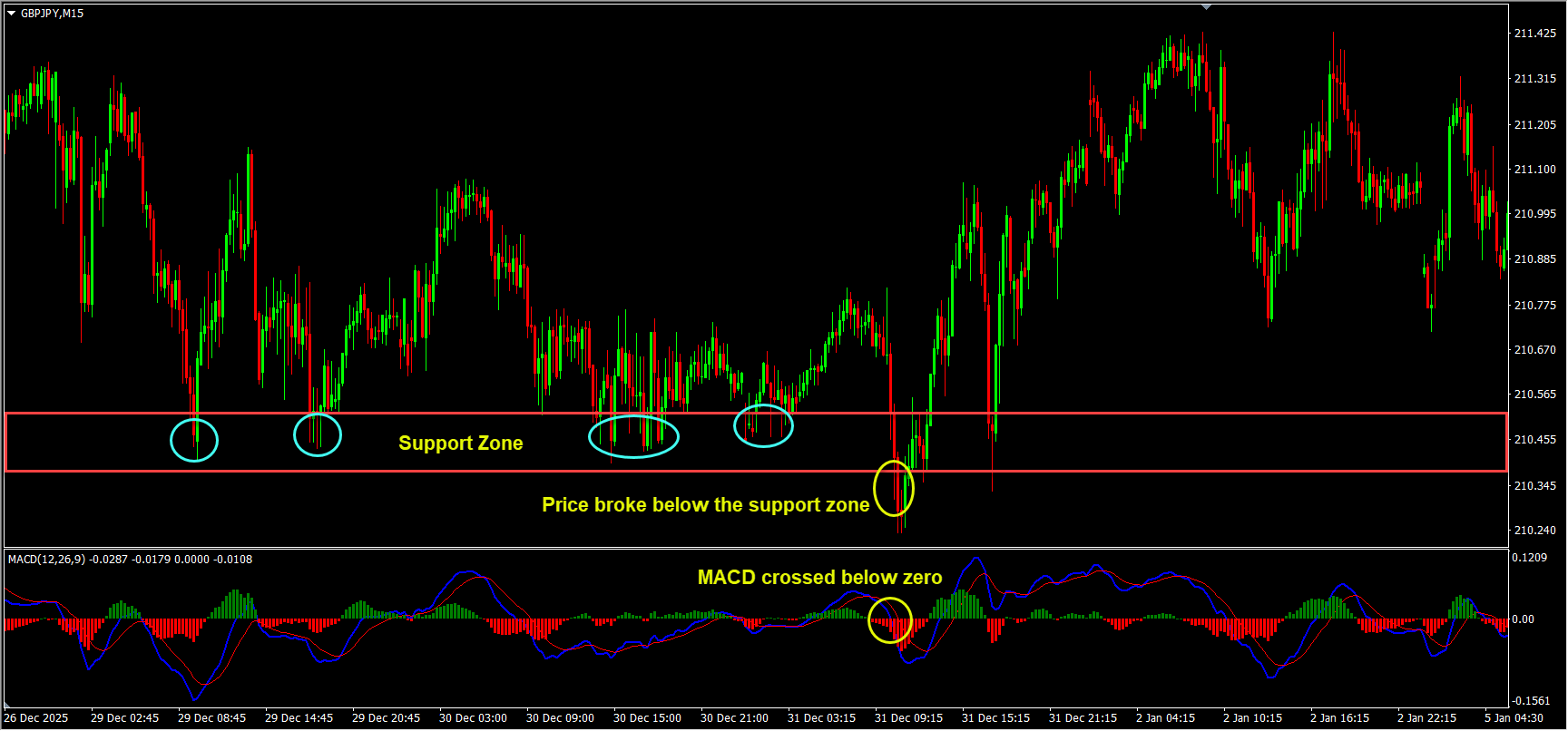
Date: 2025-12-02 Pair: GBP/JPY Direction: Sell Entry: 210.312 Stop Loss: 210.866 Take Profit: 208.693 Size: 0.3 lot Reason for Entry: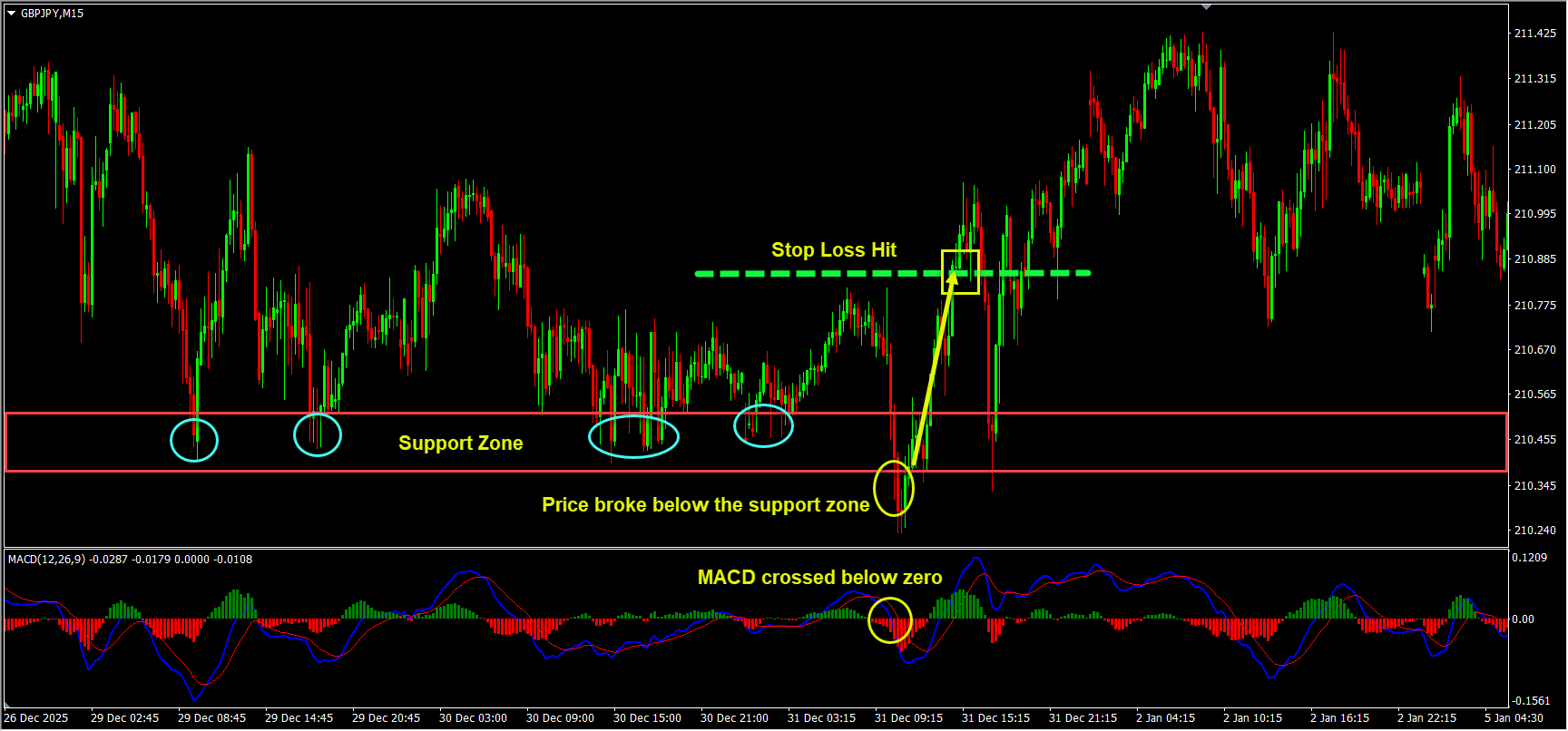 On the M15 chart, the price broke below the support area with the MACD indicator going below zero.
Market Context:
On the M15 chart, the price broke below the support area with the MACD indicator going below zero.
Market Context:
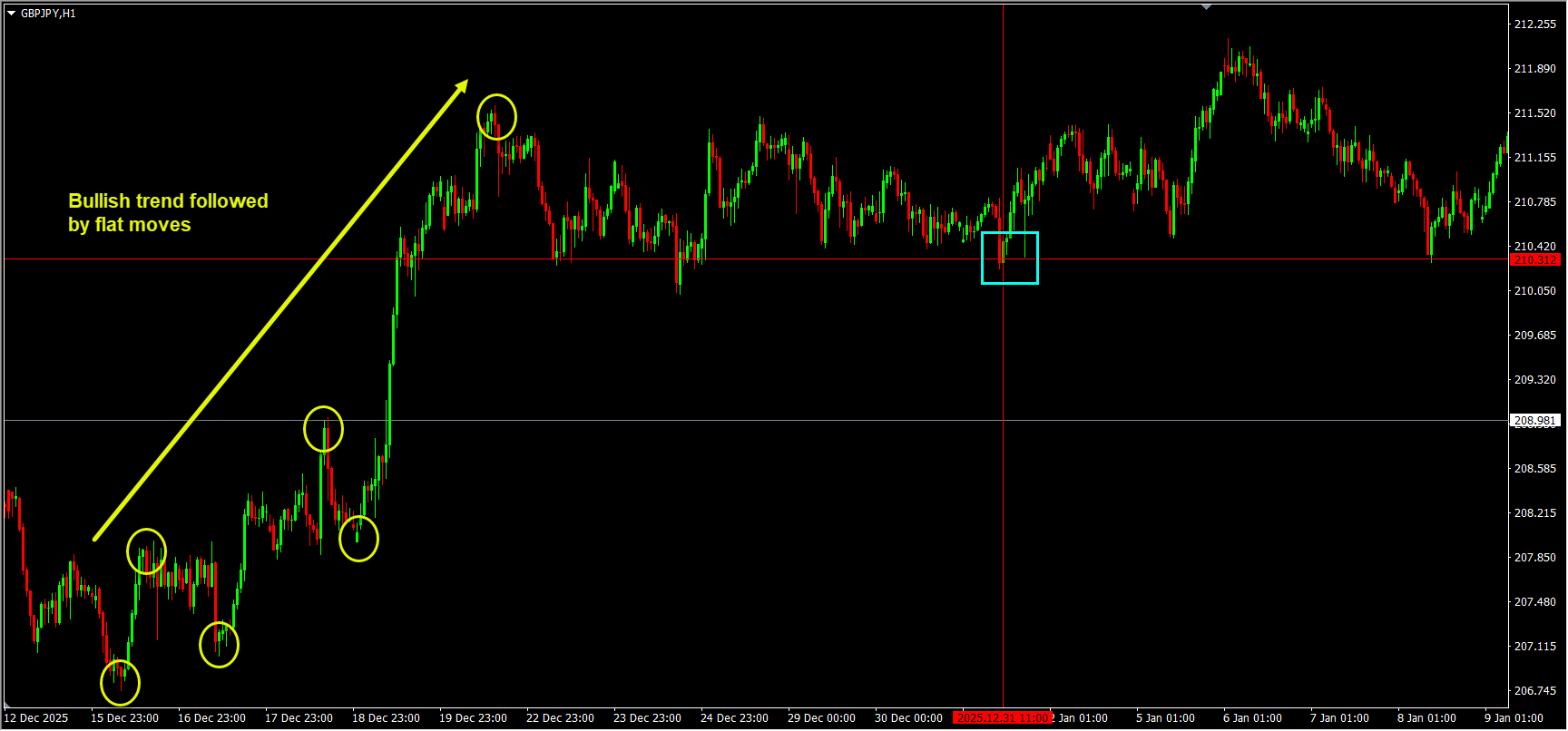 Mixed signals on higher timeframes. No clear direction on H1 currently.
Emotional State:
Rushed—felt pressure after seeing a sharp move lower. Didn’t wait for retest. Didn’t confirm higher time frames.
Outcome:
Mixed signals on higher timeframes. No clear direction on H1 currently.
Emotional State:
Rushed—felt pressure after seeing a sharp move lower. Didn’t wait for retest. Didn’t confirm higher time frames.
Outcome:
 Stop loss hit. -55 pips.
Notes & Lessons:
Breakouts without trend confirmation can be false. Next time, wait fora retest or alignment across timeframes.
Stop loss hit. -55 pips.
Notes & Lessons:
Breakouts without trend confirmation can be false. Next time, wait fora retest or alignment across timeframes.
📌 What Makes These Examples Effective?
Each example doesn’t just list outcomes—it explains: 🔹 Reason for trade 🔹 Market context 🔹 Trader mindset 🔹 What to improve next time Your journal becomes less like a ledger and more like a learning blueprint.
🧠 How to Turn Your Journal Into a Performance Review Tool
A journal is only useful if you review it regularly. Here’s a simple monthly review process:Step 1 — Group Trades by Type
For example – Trend trades, breakouts, news plays — separate them.Step 2 — Compare Win/Loss Rates Of Your Setups
Which setups are consistently profitable?Step 3 — Analyze Risk/Reward Ratios
Are you risking too much for too little gain?Step 4 — Emotional Pattern Check
Do you make worse decisions when stressed or tired? Or when the market is not really moving?Step 5 — Action Plan
Write a short improvement plan:✔ Improve entries
✔ Avoid the news
✔ Adjust stop placement
✔ Build confidence
🧾 Examples of Helper Columns You Can Add to Your Journal
To make your record even more powerful, include: 📌 Setup Category Trend pullback, breakout, range trade, reversal 📌 Market Session Asian, European, US 📌 Risk/Reward Ratio Example: 1:3 📌 Confidence Level (1–10) How strongly you believed in the setup 📌 Execution Notes Did you enter at first touch, or wait for confirmation?🚀 Sample Journal Format (Simple & Powerful)
| Date | Pair | Direction | Entry | SL | TP | RR | Setup | Emotion | Result | Notes |
|---|---|---|---|---|---|---|---|---|---|---|
| Nov 10 | EUR/USD | Buy | 1.10930 | 1.10650 | 1.15725 | 1:5 | Trend pullback | Calm | +450 pips | Good alignment |
| Dec 2 | GBP/JPY | Sell | 210.312 | 210.866 | 209.00 | 1:3 | Breakout | Rushed | -55 pips | Needed retest |

🧠 Your Journal Is a Habit, Not a Task
Many traders start a journal and then stop because they find it boring or time-consuming. But the truth is: 👉 Consistent journaling develops consistency in your trading decisions. It trains you to think in patterns, not feelings. Every great trader has one thing in common: They learn faster than they lose. And the heartbeat of that learning is the trading journal.Final Thought
Your trading journal is not about recording perfection—It’s about recording progress. Each entry/exit to/from the trade is a conversation with yourself:What worked?
What didn’t?
What will I do differently next time?
When you commit to journaling with honesty and structure, your mistakes shrink, and your profitable decisions grow.